Moneyball Marketing: How Predictive Marketing Changes the Game
(Adobe Digital Marketing Summit 2012 Breakout Session Recap)
I hate baseball. Before all of the baseball fans out there decide to click-through to another blog, let me explain.

http://blogs.adobe.com/digitalmarketing/wp-content/uploads/2012/03/Scoreboard.jpg

Even though I played baseball for seven years as a child, I was always that kid … you know which kid I am referring to – the one in the outfield throwing his glove in the air, chasing bugs and butterflies, and waiting for something … anything to happen. My dislike for baseball most likely resulted from boredom and my general lack of interest and talent. However, after watching Moneyball last November I could not help but fall in love with the game. Moneyball provides a nexus where past and future collide between professional sports and predictive analytics – making both subjects more interesting to the masses. Just as Moneyball has transformed the professional sports industry, there is an equally powerful impact from the application of predictive analytics to digital marketing – Predictive Marketing.
Moneyball Marketing
During Adobe’s Digital Marketing Summit in Salt Lake City last week, I outlined the value proposition and associated solutions in a presentation entitled, Moneyball Marketing: How Predictive Marketing Changes the Game. By leveraging predictive marketing, marketers can eliminate the guesswork in marketing and take a proactive, rather than reactive, approach to optimization. Predictive marketing empowers a digital marketer with the ability to essentially change the future of their business. Though marketers face competing marketing budgets and fierce competition within their industry, predictive marketing provides a means for leveling the playing field.
In Moneyball, Peter Brand (Jonah Hill) explains to Billy Beane (Brad Pitt), the General Manager of the Oakland A’s, that “there is an epidemic failure within the game to understand what is really happening and this leads people who run major league baseball teams to misjudge their players and mismanage their teams.” The digital marketer faces a similar challenge –
“There is an epidemic failure within digital marketing to understand what is really happening and this leads people who run digital marketing programs to misjudge their customers and mismanage their businesses.” Predictive marketing offers the cure to almost every ill-informed analysis and poorly managed optimization effort by unearthing hidden patterns in large sets of data and providing foresight for future decisions. Predictive marketing provides the marketer with the ability to intelligently interact with their customers at every stage of engagement – disrupting past web performance with unprecedented levels of success.
Spring Training – Success Storyhttps://blog.adobe.com/media_a5b11ba4f5de195a4df596c09b0b5ce676062bd4.gif
By not really understanding what has happened or what will happen, digital marketers are ill-equipped to capitalize on future opportunities and mitigate future risks with customers and their businesses. For example, a leading technology company partnered with Adobe’s Predictive Analytics Consulting team to help them build a predictive model that would forecast traffic levels and identify the primary acquisition levers that they could “pull” that would have the greatest expected impact on future traffic levels. Weeks before Black Friday / Cyber Monday, the model forecasted a 20% decline in year-over-year traffic (back-testing of the model showed 98.9% accuracy) during their biggest sales season of the year. Rather than waiting to receive a report on performance after Black Friday / Cyber Monday, a proactive approach to optimization was taken. In an effort to increase the expected traffic levels, the key stakeholders for each marketing channel along with Adobe Consulting met and strategically planned initiatives to take advantage of those traffic acquisition levers that had been previously identified. By implementing every initiative with SiteCatalyst tags, we were able to measure the incremental impact of our efforts. Though economic and competitive factors hampered demand for this company’s products, we were still able to increase the year-over-year traffic from a forecasted 20% decline to an actual 8% decline – leading to $2.5M in incremental revenue in two days. This is but one of many applications for predictive marketing.
What Is Predictive Marketing, Really?
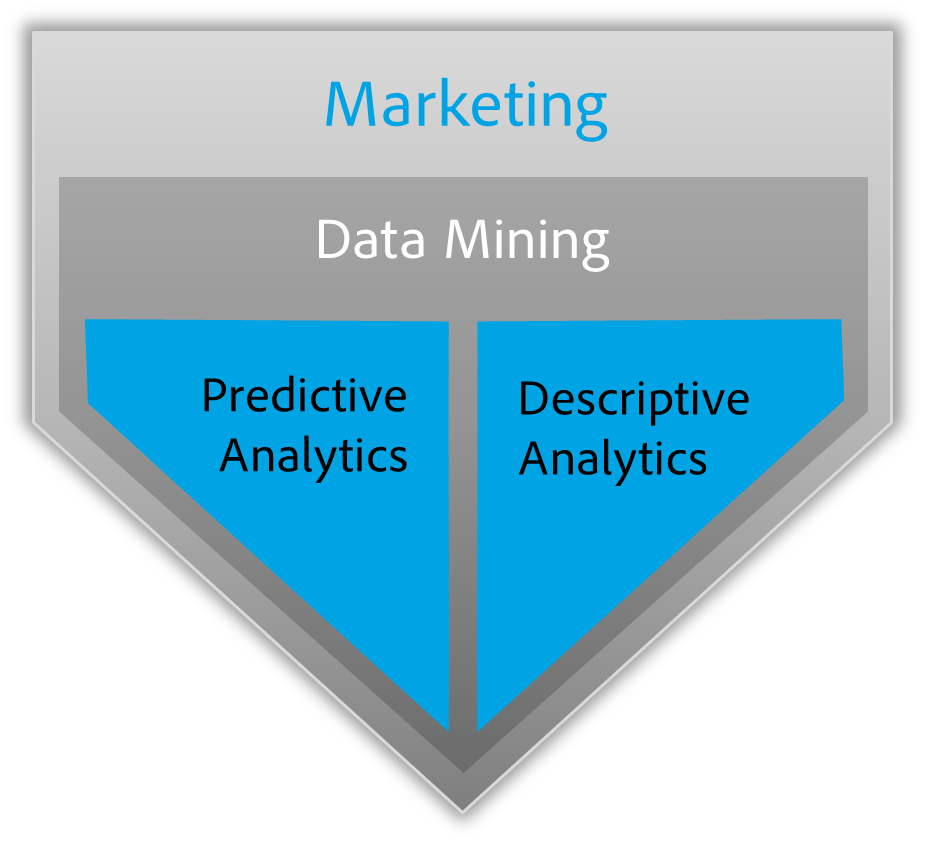
Many of you have probably heard of “predictive analytics” and may be wondering what the difference is between “predictive analytics” and “predictive marketing”. While predictive analytics can be applied to a wide range of fields and industries (e.g., supply chain, security intelligence, real estate, professional sports, sales and CRM, marketing, insurance, etc.), predictive marketing represents the direct application of predictive analytics to the needs and challenges of the marketer. As the leader in predictive marketing, Adobe seeks to empower digital marketers with the ability to make intelligent, forward-looking decisions through automation, visualization and user experience innovations coupled with powerful predictive models.https://blog.adobe.com/media_43f2cb70812c2da3346ab8fd863ccaab6df7374a.gif

The Benefits of Predictive Marketing
Predictive marketing provides value to everyone from analysts to technology experts to web content managers in all industries. For the advertiser trying to identify which variables are most predictive of increased CTR (click-through rate), predictive marketing provides a solution. However, publishers can leverage predictive marketing to forecast advertising inventory for future periods. The following table represents some examples of the types of challenges solved by predictive marketing for different types of digital marketers:

http://blogs.adobe.com/digitalmarketing/wp-content/uploads/2012/03/Table.png
The Aberdeen Group recently published an article entitled Predictive Analytics for Sales and Marketing: Seeing Around Corners that outlines the significant benefits that come to those organizations that apply data mining and statistical modeling to optimize marketing efforts. Predictive marketing drives as much as 2X lift from marketing campaigns, 76% higher click-through rate, and 73% higher sales lift.

http://blogs.adobe.com/digitalmarketing/wp-content/uploads/2012/03/AberdeenGroup_PA.png


Predictive marketing represents the next phase of analytics and optimization for digital marketers. We have completed our pregame warm up and we are now ready to enter the big leagues. Over the coming weeks I will take time to dive deeper into specific applications of predictive marketing and how digital marketers can leverage predictive marketing in their decision processes and workflows.