Don’t Be Guilty by Association: Seven Ways to Maintain Brand Safety

Once upon a time, digital advertisers had to approach publishers directly to place their ads on websites. It wasn’t cost-effective, and it definitely wasn’t a very scalable way to operate, as marketers had to piece together each advertising campaign by individually contracting with hundreds of individual websites and publishers. However, on the up side, it gave advertisers control over where their ads were being placed.
Then, ad networks emerged as middlemen, offering a way to reach audiences across many publishers. But, ad networks are not necessarily transparent about their fees, margins, and inventory, and they lack efficient controls (like frequency-capping or budget-management) across multiple exchanges.
Now, over the last few years, the programmatic — or automated — purchase of display ads has been on the rise. This year alone, more than two-thirds of all digital display content will be purchased programmatically. Advertisers can now access multiple inventory sources and ad exchanges through a single unified platform (called a demand-side platform, or DSP). An auction is held to serve an ad to a particular visitor, and the price can be determined in real time. Further, with DSPs like Adobe Media Optimizer (AMO), there is transparency in the margins the advertiser is paying, which was never the case with the cloudier ad-network buys.
But, with all these advantages, there has also been a rise in concern regarding where ads are appearing.
- Is the publishing site agreeable with the advertiser’s brand?
- Is the content on the specific page where the ad will appear consistent with the messaging of the ad, or will the ad/brand perhaps appear insensitive given the content on the page?
- Are there any legal issues that may arise when advertising certain products and/or services with regulatory restrictions adjacent to certain types of content?
The Importance of Brand Safety
Countering risks such as these is what we refer to as brand safety. For instance, a reputable news site may be an ideal advertising destination to place an ad for a truck manufacturer — except if the ad were to be placed on a page reporting an attack in which suspects used a truck to carry out the tragedy. Another example of poor ad placement is an airline advertisement being displayed on a page covering news of a recent flight disaster. Brands also may not want to show their ads on pages that contain pirated content. In some countries, ads for products like cigarettes and alcohol are banned from sites that children may frequent.
Failing to pay attention to where your ad is appearing, as well as the resulting audience sentiment, can make even the most reputable brands appear insensitive and expose them to both legal and social scrutiny.
According to the Integral Ad Science’s (IAS) H1 2016 Media Quality Report, brand-safety risk within programmatic advertising is 62 percent greater than publisher-direct ad buys. In a world where people are growing progressively more aware of brands’ images — and are more likely to support the companies they perceive as being ethical and fair at all levels of their product’s life — it makes sense for advertisers to become familiar with ways in which they can preserve their brand safety in the world of automated digital-ad buying.
Seven Ways to Ensure Brand Safety
Below are some tips that advertisers can use to counter brand-safety risk. The first two are basic steps that any responsible advertiser should take, but they deserve mentioning, nevertheless.
1. Partner Responsibly.
It is important for an advertiser to partner with a reputable DSP that is either certified in brand safety or has partnered with a certified vendor. Among other things, this will allow only a filtered inventory of sites to be made available for bidding, and thus, reduce brand risk.
2. Know Your Audience.
Most advertisers know the age, gender, and location of their target audience. Layering on more targeting — for instance, education level, memberships, or family size — may decrease your audience size but will give you access to the right people in the right environment or domains. This especially works for advertisers that are focusing on more than just impressions.
3. Use Pre-Bid Decisioning. (Highly Recommended)
Often, brand-safety analysis is done in hindsight, as many companies rely on post-bid reporting to show where ads were placed. However, if inappropriate content is discovered, it’s often too late to protect the brand’s reputation.
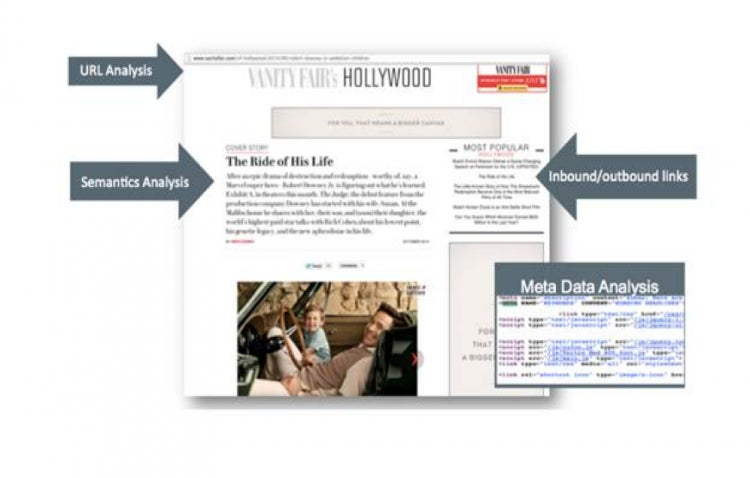
By contrast, DSPs like Adobe Media Optimizer have partnered with IAS to do pre-bid decisioning before ads are placed. Pre-bid decisioning involves thorough evaluations of webpages on multiple variables, including URL analysis, semantics analysis, images, inbound/outbound links, and metadata analysis. Each of the areas can be further customized with keyword blocking, geo-compliance, and custom site lists. Pre-bid decisioning is a preferred strategy for brand safety because most sites can be assessed both thoroughly and quickly before any advertising appears.
4. Run Your Domain Report Post-Bid.
If advertisers lack access to a sophisticated DSP that provides pre-bid decisioning to prevent ads from being placed on questionable websites, they can at least run their domain report after-the-fact to determine what sites received the impression. Though this obviously won’t prevent ads from being published on offensive websites initially, it does allow advertisers to exclude offending sites from future ad buys.
5. Eliminate Harmful Websites by Category.
Sites on the Internet are filtered into categories based on their content, and these category names are then made available to advertisers to include or exclude. Generally, the following entire-site categories that tend to be eliminated as harmful are adult-themed, alcohol, adware/malware, hate speech, illegal downloads/pirated content, illegal drugs, offensive language, and violence. Of course, these are just the most common categories that brands should consider — each brand is different, and there is no right or wrong answer. Each brand will need to weigh the opportunity presented by the audience it can reach with the impact of the content it associates with.
6. Create Keyword Lists.
Keyword lists can help identify content that may exist on sites in otherwise “safe” categories. They are also used to block content and geographies, as needed, in an advertising campaign. To build upon an earlier example, an airline may want to include keyword terms related to flight disasters that may be reported on news sites or blogs to avoid showing ads on those specific pages.
7. Buy in Private Marketplaces.
A private marketplace is an invitation-only, real-time bidding (RTB) auction in which a publisher (or several) will invite a select number of buyers to bid on its inventory. The purchases are fully transparent, and the buyer knows exactly which site the ad will run on. There are some platforms (including Adobe Media Optimizer) that allow both programmatic and private marketplace buys via a single platform.
It is obvious that, although automated buying may increase brand risk in the short term, it is this very same automation that is now working to create scalable ways to maintain brand safety. With the right partnerships and correct proactive measures, advertisers can eliminate brand risk entirely.
Partnering With IAS: The Way Forward for Adobe
Adobe Media Optimizer is a leading DSP that has chosen to partner with Integral Ad Science (IAS), the industry’s recognized leader in brand protection, ad verification, and ad-viewability data. IAS is a global technology and data company that empowers the advertising industry to effectively influence consumers everywhere and on every device. IAS references its certification by the Media Rating Council (MRC) to validate their brand-safety technology. By partnering with IAS, Adobe ensures brand safety at the page level while remaining protected against fraud and several content risk categories.
https://theblog.adobe.com/experience-cloud/advertising-cloud/