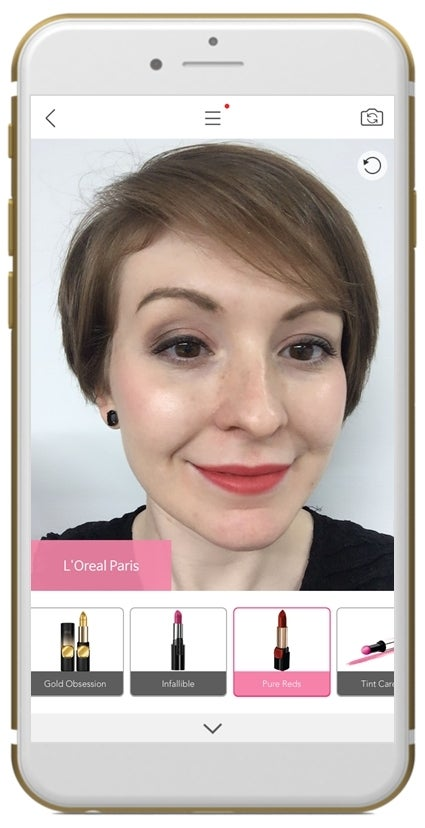
As consumers become more receptive to AR experiences, organizations, too, are trying to figure out appropriate use cases. The promise? Get a user into an immersive AR environment that ignites multiple human senses, and receive an unprecedented level of engagement.
The emotional connections people make with brands through sight, sound, and motion are undeniable. We’ve seen it with television and digital video. But as technology continues to evolve, customer experiences are moving away from just what people see to immersing them in the brand experience itself.
One technology that’s truly shaking up the landscape is augmented reality (AR), which superimposes an image onto a user’s view of the real world and enhances it with sound, touch, and even smell. Indeed, AR is blurring the lines of reality.
Of course, as consumers become more receptive to AR experiences, organizations, too, are trying to figure out appropriate use cases. The promise? Get a user into an immersive AR environment that ignites multiple human senses, and receive an unprecedented level of engagement.
While AR is still in its early days, here are five organizations that, we believe, demonstrate how AR will one day change the world.
Pepsi MAX
PepsiCo recently pranked commuting Londoners with an AR-enabled bus stop display. Travelers were shown a prowling tiger, a meteor crashing, and an alien tentacle grabbing people off the street. A mere description doesn’t do the program justice. See for yourself:
https://www.youtube.com/embed/SWzurBQ81CM
U.S. Army
The United States Army is giving soldiers improved situational awareness with the use of AR technology. The tech, called “Tactical Augmented Reality” (TAR), is essentially an eyepiece that helps soldiers precisely locate their positions as well as the locations of others—both friend and foe.
TAR will one day replace night-vision goggles, as it enables soldiers to see in the dark. It will also replace the handheld GPS system that soldiers carry today to approximate their positions. The eyepiece is connected wirelessly to a tablet that soldiers wear on their waists, plus it’s wirelessly connected to a thermal site mounted on their rifles or carbines. Here’s the cool part: If a soldier is pointing his or her weapon, the image of the target, plus other details ,such as the distance to target, can be seen through the eyepiece.
https://www.youtube.com/embed/x8p19j8C6VI
Acura
This month, Acura live-streamed an AR race featuring its 2018 TLX sedan. From behind the wheel of Acura’s newest model, four influencers competed in the “What a Race” AR experience for the fastest overall time during three-lap individual runs.
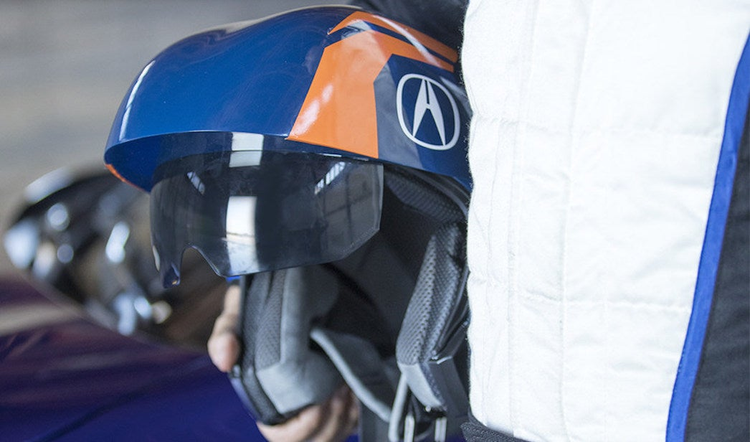
Each lap triggered a new AR course visible to the driver and the Facebook Live audience, with a unique set of visuals and obstacles that tasked the Acura TLX A-Spec’s precise handling to overcome. Cameras mounted to the drivers’ helmets brought viewers directly in on the action. Each driver sported custom-built race helmets with AR technology embedded in an extra-wide visor, allowing for an unprecedented full-color, HD, 180-degree viewing experience. The helmets were connected to a computer in the rear seat that provided the high performance-rendering capacity needed to keep the experience running smoothly and visually sharp at high speeds–all powered by the Acura TLX.
https://www.youtube.com/embed/JYIrHnfobyY
Disney
Back in 2015, Disney Research developed technology that makes coloring book characters 3D as they are being colored. The reason we’re including this older example in our roundup? Because it is such a simple application but shows the potential for AR to become a staple in everyday life. See the demo:
https://www.youtube.com/watch?v=SWzurBQ81CM
L’Oréal