Government Website Analytics: One Place to Manage All Your Data and Learn Citizens’ Real Needs

By Kumar Rachuri, Director of State and Local Government Solutions
“You can’t manage what you can’t measure.” – Peter Drucker
Today’s marketing geniuses ensure their most important decisions are guided by data.
The numbers give you the power to understand what your audience is interested in—what they’re clicking on and what they’re skipping—as well as what displays work. With tools to understand what engages them the most, you can create the tailored online experience that delights them, helps them, and keeps them coming back.
Data is important and powerful to government agencies in particular because it gives deeper insights into what the various and diverse number of citizens are concerned with. Data can show whether more people are coming to an agency to seek help with filing taxes, setting up businesses, or asking questions regarding public health or construction.
With those insights, an agency can decide how to best display information to help the people they are serving. It’s a key step and an effective tool to making the information on your website more tailored and personalized.
If citizens don’t understand something or can’t find what they need online, they will likely want to call the agency and speak to a human. But staffing an agency or call center with actual people is cumbersome and expensive.
Better data helps solve this problem even before it occurs. By understanding audience needs before they arise, you provide targeted customer service to your customers. That’s the power of data. That’s why the numbers should inform all of your decisions, not just in the marketing department.
This can be a big mental shift for some agencies that are not yet used to the power of data. But getting an entire agency up to speed on the insights the numbers provide will save time, money and effort in the long run.
In order to foster a culture where data is at the heart of every decision, an agency ought to provide access for your entire staff to the analytics platform you use. That way, everyone is empowered to gather his or her own insights and theories.
Analytics platforms that help you do this have evolved greatly in the past few years. The best analytics platforms today don’t just show a graph with a spreadsheet of numbers. They also guide you toward insights and actions gathered from the smart algorithms.
Remember, data is there to help you make targeted business decisions. They’re useless just on their own. Without the analysis and insight drawn from them, they’re just meaningless numbers. With today’s new technology, you can ask more useful questions that inform your next action. How does that result impact your user experience? What does that say about your page?
The worst habit is to collect data and never check it. Leverage the insights that you are sitting on—they are itching for action. Instead of simply showing the number of clicks, shares, or likes on a page, share theories to test and execute based upon the conclusions you draw from that data.
HARNESS THE POWER OF DATA IN ONE PLACE WITH ADOBE ANALYTICS
http://www.adobe.com/data-analytics-cloud/analytics.html
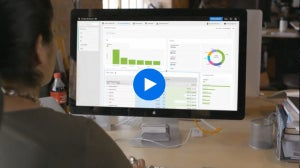
Adobe Analytics gives you a full picture of your users as people—what they like, what they need and what they want. It does this all in an elegant interface. For example, it shows a graph of your key metrics at-a-glance. You can then dive deeper.
Analytics also allows you to explore frequent users, segmentation, and customize reports. You can identify issues in how people are interacting with your digital experiences across multiple devices. You can also take advantage of machine learning and AI to generate more insights and offer more creative experiences to your audiences.
Adobe Analytics partnered with The Home Depot to help the fix-it giant carry its core tenets of customer service from their physical stores to the digital space. The platform helps the home-improvement retailer understand their customers better and what the friction points online were. It focused on helping their customers find what they need by highlighting the specific products they need for projects they’re working on in their homes.
Though government is a not-for-profit, its mission for online experiences is similar to those of retailers. Agencies must prioritize delivering quality service for the public. This, in turn, increases the satisfaction of its citizens, builds trust and solidifies relationships within communities. Enriching the citizen experience with government online is vital to serving the public today.
Adobe Analytics is key in moving forward and getting an edge in doing so.