It’s September, and for many, this is the time to get back to work or back to school in a big way. So as you spring back into action, check out these website and app designs we love, hand-picked by top UX designers from across the world.
Mia Chuang, User Experience Director at Moving Brands
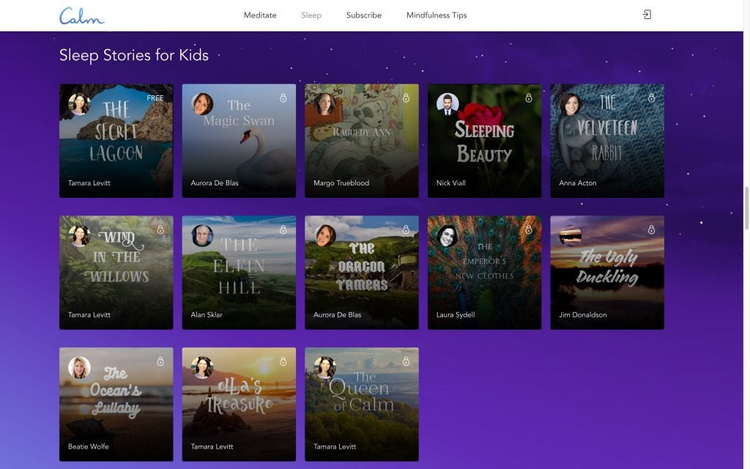
Calm’s microinteractions are delightful. A good example is its “Breathe” feature where an expanding and contracting circle guides the user in inhaling and exhaling. The movement and changing color mimics how a user would fill and empty their lungs, which I feel is extremely effective in conveying an imaginary, solitary space. It’s a lovely, simple piece of microinteraction design.
I’m an avid user of the Sleep experience too, where the app delivers calming sleep stories to adults and children. I find the concept both simple and ingenious as it does the job for a parent spending time with their children before putting them to bed.
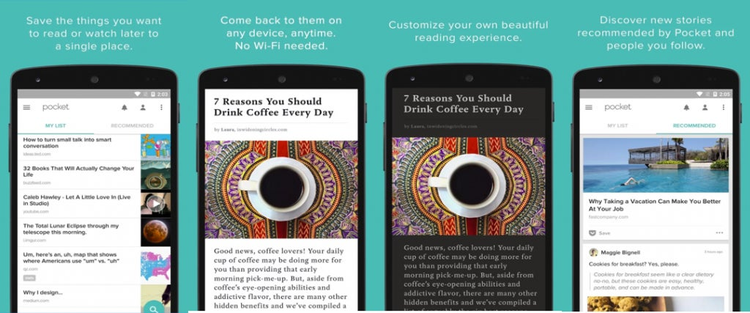
Scalability is excellent, as I can access the service from web or mobile. With a simple tap or click, I can save an article or video. There is also a cool social aspect that allows you to follow recommended people, people in your contact list, and social media profiles. This enables you to see media that your friends are recommending or reading.
The accessibility features are great and include a dark theme feature for easier reading, adjusting font size, personalizing gestures for readability, and the Listen feature which is my favorite. When I am on my way home from a day in the office I love listening to the articles I saved throughout the day. My phone connects to my hands-free system, and I simply tap the article I would like to hear.
Brooke Francesi, Senior Experience Design Lead at Adobe
Waze keeps you moving. The worst part about being stuck in traffic is not moving. Anything is better than stop and go traffic.
Waze also helps you explore your city. Because of Waze, I’ve found myself in parts of San Francisco (and other cities) on routes that I could have never used and on streets that I would have never driven. It’s fun! I often find myself driving on side streets, small alleys, and on back roads to escape main arteries.
Waze integrates beautifully with other apps like Facebook to make a complete, seamless experience, much like Spotify’s integration with Runkeeper. This one is just smart. Mix that with great new features like Waze Carpool (it’s like Lyft or Uber but rather than pay a fare, you help a brother or sister out by helping cover the cost of gas) and you’ve got one great app.
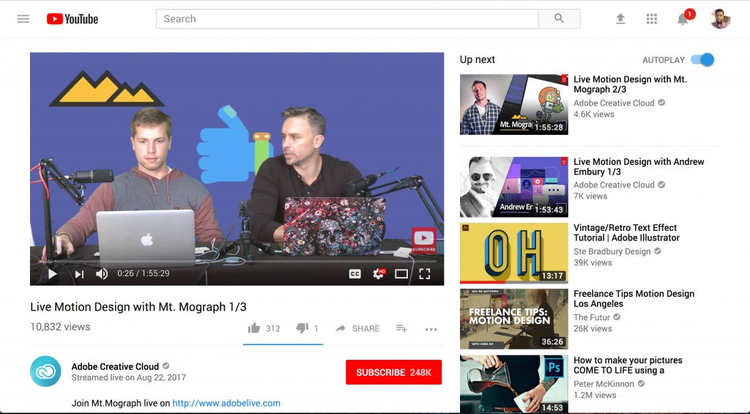
Usability – As a user of YouTube, it’s tough for me to give you an unbiased critique of its usability but there is one thing I can talk about that frustrated me. I had the hardest time trying to find the smallest things, and my question is ‘did they fix this?’ Uploading videos is still a simple drag and drop. We got a cleaner menu which is a plus, and they took out the different images for each account and added a switch accounts selection. This is really a vast improvement from the old YouTube.
The Design -Hello flat design. It took YouTube some years to get here, but they finally made it to the flat design movement. No more harsh shadows or bulky buttons. They’ve even updated link colors and button colors. The red buttons have some pink in them. I know we all noticed the new Youtube typography. They even updated the typography through the whole site, with the addition of light horizontal rules and whitespace. The most impressive thing was making the videos cleaner–they took away that harsh shadow at the bottom of the videos. Overall the design is refreshing and light.
Happy Users – Are the users happy? Well, we all need to come down off the launch to really get a feel for what they’ve done. It’s new and it looks super clean. The new menu structure is better. I can navigate my way around pretty easily and right now I’m pleased. Time will tell as we move forward if this will remain something I like to refer to as good UX.
What websites or apps are you loving right now? Let us know in the comments!
You can control how Adobe websites use cookies and similar technologies by making choices below. But note that if you disable cookies and similar technologies entirely, Adobe websites may not function properly.
Cookies are small text files stored by your web browser when you use websites. There are also other technologies that can be used for similar purposes like HTML5 Local Storage and local shared objects, web beacons, and embedded scripts. These technologies help us do things like remembering you and your preferences when you return to our sites, measure how you use the website, conduct market research, and gather information about the ads you see and interact with.
You can make choices in the menu below about what cookies and other technologies you want us to use on Adobe sites when you visit them from this browser. You can always change those choices later by clicking on the Cookie Preferences link at the bottom of the page.
If enabled:
We can improve your experience by tailoring the site and the content to things we think might be of interest
We can better keep track of your preferences — like what language you prefer to use
We will better understand your likely interests so we can provide you more relevant Adobe ads and content on non-Adobe websites and in non-Adobe apps
It will help us improve the performance of our website and those of our partners who use the Adobe Experience Cloud
If disabled:
We won’t be able to remember you from session to session so the experience may not be tailored to your interests
You’ll still have access to the content of the site but certain features that depend on cookies may not function
You’ll still see ads, they just may not be as relevant to you
General information
You can control how Adobe websites use cookies and similar technologies by making choices below. But note that if you disable cookies and similar technologies entirely, Adobe websites may not function properly.
Cookies are small text files stored by your web browser when you use websites. There are also other technologies that can be used for similar purposes like HTML5 Local Storage, web beacons, and embedded scripts. These technologies help us do things like remembering you and your preferences when you return to our sites, measure how you use the website, conduct market research, and gather information about the ads you see and interact with.
You can make choices in the menu below about what cookies and other technologies you want us to use on Adobe sites when you visit them from this browser. You can always change those choices later by clicking on the Cookie Preferences link at the bottom of the page.
If enabled:
We can improve your experience by tailoring the site and the content to things we think might be of interest
We can better keep track of your preferences — like what language you prefer to use
We will better understand your likely interests so we can provide you more relevant Adobe ads and content on non-Adobe websites and in non-Adobe apps
It will help us improve the performance of our website and those of our partners who use the Adobe Experience Cloud
If disabled:
We won’t be able to remember you from session to session so the experience may not be tailored to your interests
We’ll still count your use of our site and services
You’ll still have access to the content of the site but certain features that depend on cookies may not function
You’ll still see ads, they just may not be as relevant to you
Operate the site and core servicesOperate site and measure engagement
Always active
These cookies are required, and they are used to enable the site and related services core functionality. Without them the site could not operate, so they cannot be disabled.
These cookies enable the site and related services’ core functionality and collect statistics about user engagement, such as counting active use to help us understand trends. These cookies cannot be disabled.
Measure performance
These cookies are used to analyze site usage to measure and improve performance. Without them Adobe cannot know what content is most valued and how often unique visitors return to the site, making it hard to improve information we offer to you.
These cookies are used to analyze site usage to measure and improve performance. Without them Adobe cannot know what content is most valued, making it hard to improve information we offer to you.
Extend functionality
These cookies are used to enhance the functionality of Adobe sites such as remembering your settings and preferences to deliver a personalized experience; for example, your username, your repeated visits, preferred language, your country, or any other saved preference.
Personalize advertising
These cookies are used to enable Adobe and our partners to serve ads more relevant to your interests. Without them you will still see ads, but they might not be as relevant to you.