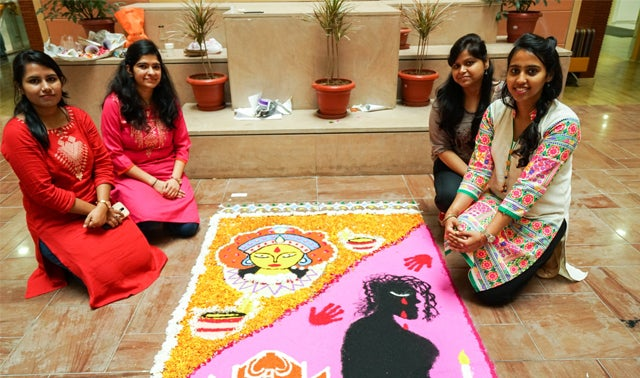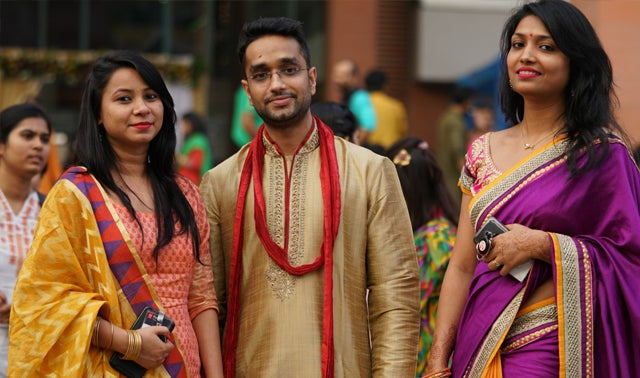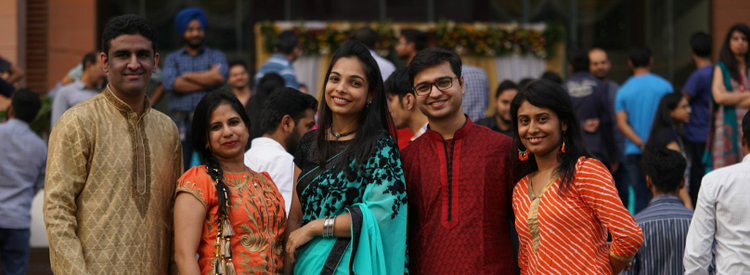
Also known as the festival of lights, Diwali is celebrated by millions around the world in either October or November, depending on the Hindu lunar calendar. Though the origin and reasons for its celebration vary by region and religion, it shares a common theme — new beginnings, the triumph of good over evil, light over darkness. During the festivities, Houses are decorated with diyas (oil lamps), candles and colorful rangoli — an art form in which patterns of colored rice, dry flour, sand or flower petals are created on the floor—and families come together to feast and share gifts.
Bringing Together Family and Friends
Several Adobe employees shared what the festival means to them and how they celebrate with their family.
“It is a festival that celebrates family. I find it is like Thanksgiving and Christmas in the U.S.,” said Raghu Rao.
For Kalindi Raichura, “Diwali has always been something empowering: a time to reflect on all of the positives within our lives — our loving friends and family, our good health, and prosperity — and realize what is truly important. Diwali literally means ‘a row of lamps’ in Sanskrit. Diwali celebrates the return of Lord Rama, King of Ayodhya, with his wife Sita and brother Lakshmana from a 14-year exile and a war in which he vanquished the demon king Ravana. It was said that the whole city of Ayodhya was lit up with a million lamps to welcome the king.”