You may be familiar with the Adobe PhotoshopSpot Healing Brush, which makes blemishes and other flaws vanish from your photos in seconds. But did you know the same brush lets you remove distracting sounds from your audio files in Adobe Audition? It’s never been easier to eliminate unwanted noises from your podcasts, videos, and more.
Open and explore your audio files
Audition lets you work with a wide range of audio formats, from audio-only files to audio embedded within your video files. Choose Open from the File menu, and then locate the audio file you’d like to work with.
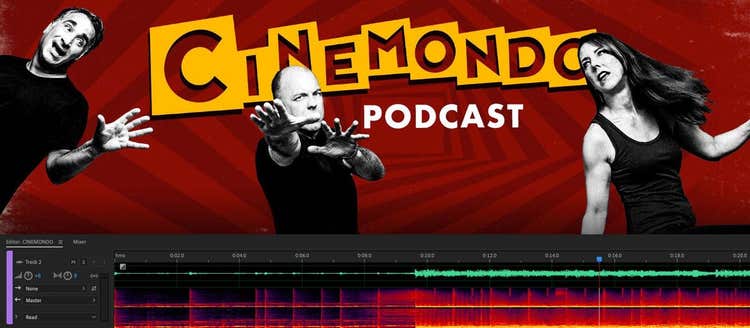
The Waveform Editor and Spectral Frequency Display panels in Audition give you a visual representation of the audible data in both your audio and video files.
The above example shows an audio file with both the Waveform Editor and Spectral Frequency Display panels visible. Not only do these panels visually represent the audio in your file, but they also enable you to edit the audio visually.
Remove unwanted sounds from your audio
The example below shows podcast audio in which a beep can be heard in the background when one of the hosts is talking. Use the Spectral Frequency Display panel to see the unwanted noise in the file. When you look at the visual patterns of the host speaking, the beeping noise becomes clearly visible.
The Spot Healing Brush in Audition allows you to “paint out” the unwanted audio — just like removing a blemish from a photo in Photoshop.
Now select the Spot Healing Brush and paint over the areas of the audio you’d like to remove. Audition uses Adobe Sensei AI technology to evaluate the audio and remove the sounds contained within the area you’ve painted. And just like when you remove unwanted content from a photo, you may need to paint over the area a few times to remove all the residual bits of unwanted audio.
Check out the “Cinemondo Podcast”
The “Cinemondo Podcast” is a horror, sci-fi, strange movie podcast where three movie fiends (Kathy, Mark, and Burk), who work in the entertainment industry, talk about genre films. It is available for free on all streaming platforms including iTunes, Spotify, Radio Public, and Google Play.
Learn more about working with audio in Audition
Podcast subscriptions are growing at an amazing rate, and now it’s easy to create this in-demand content by using Audition to combine narration, sound effects, and music.
Join us for this unique webinar,
and learn to:
Perform multi-track editing
Edit and layer sounds
Fix audio mistakes
Add music and sound effects
Adobe Creative Cloud e-learning series:
Title
Quickly Remove Unwanted Audio Content with the Spot Healing Brush in Adobe Audition
Description
You may be familiar with the Adobe Photoshop Spot Healing Brush, which makes blemishes and other flaws vanish from your photos in seconds. But did ...
You can control how Adobe websites use cookies and similar technologies by making choices below. But note that if you disable cookies and similar technologies entirely, Adobe websites may not function properly.
Cookies are small text files stored by your web browser when you use websites. There are also other technologies that can be used for similar purposes like HTML5 Local Storage and local shared objects, web beacons, and embedded scripts. These technologies help us do things like remembering you and your preferences when you return to our sites, measure how you use the website, conduct market research, and gather information about the ads you see and interact with.
You can make choices in the menu below about what cookies and other technologies you want us to use on Adobe sites when you visit them from this browser. You can always change those choices later by clicking on the Cookie Preferences link at the bottom of the page.
If enabled:
We can improve your experience by tailoring the site and the content to things we think might be of interest
We can better keep track of your preferences — like what language you prefer to use
We will better understand your likely interests so we can provide you more relevant Adobe ads and content on non-Adobe websites and in non-Adobe apps
It will help us improve the performance of our website and those of our partners who use the Adobe Experience Cloud
If disabled:
We won’t be able to remember you from session to session so the experience may not be tailored to your interests
You’ll still have access to the content of the site but certain features that depend on cookies may not function
You’ll still see ads, they just may not be as relevant to you
General information
You can control how Adobe websites use cookies and similar technologies by making choices below. But note that if you disable cookies and similar technologies entirely, Adobe websites may not function properly.
Cookies are small text files stored by your web browser when you use websites. There are also other technologies that can be used for similar purposes like HTML5 Local Storage, web beacons, and embedded scripts. These technologies help us do things like remembering you and your preferences when you return to our sites, measure how you use the website, conduct market research, and gather information about the ads you see and interact with.
You can make choices in the menu below about what cookies and other technologies you want us to use on Adobe sites when you visit them from this browser. You can always change those choices later by clicking on the Cookie Preferences link at the bottom of the page.
If enabled:
We can improve your experience by tailoring the site and the content to things we think might be of interest
We can better keep track of your preferences — like what language you prefer to use
We will better understand your likely interests so we can provide you more relevant Adobe ads and content on non-Adobe websites and in non-Adobe apps
It will help us improve the performance of our website and those of our partners who use the Adobe Experience Cloud
If disabled:
We won’t be able to remember you from session to session so the experience may not be tailored to your interests
We’ll still count your use of our site and services
You’ll still have access to the content of the site but certain features that depend on cookies may not function
You’ll still see ads, they just may not be as relevant to you
Operate the site and core servicesOperate site and measure engagement
Always active
These cookies are required, and they are used to enable the site and related services core functionality. Without them the site could not operate, so they cannot be disabled.
These cookies enable the site and related services’ core functionality and collect statistics about user engagement, such as counting active use to help us understand trends. These cookies cannot be disabled.
Measure performance
These cookies are used to analyze site usage to measure and improve performance. Without them Adobe cannot know what content is most valued and how often unique visitors return to the site, making it hard to improve information we offer to you.
These cookies are used to analyze site usage to measure and improve performance. Without them Adobe cannot know what content is most valued, making it hard to improve information we offer to you.
Extend functionality
These cookies are used to enhance the functionality of Adobe sites such as remembering your settings and preferences to deliver a personalized experience; for example, your username, your repeated visits, preferred language, your country, or any other saved preference.
Personalize advertising
These cookies are used to enable Adobe and our partners to serve ads more relevant to your interests. Without them you will still see ads, but they might not be as relevant to you.