NCMEC’s Gavin Portnoy drives social impact through digital transformation
Why do you do what you do?
For many of us, the answer to this question is practical; we take on jobs that challenge us, give us opportunities to put our talents to good use and allow us to financially support ourselves and our families.
Sometimes we answer a special calling that directs us towards a particular career.
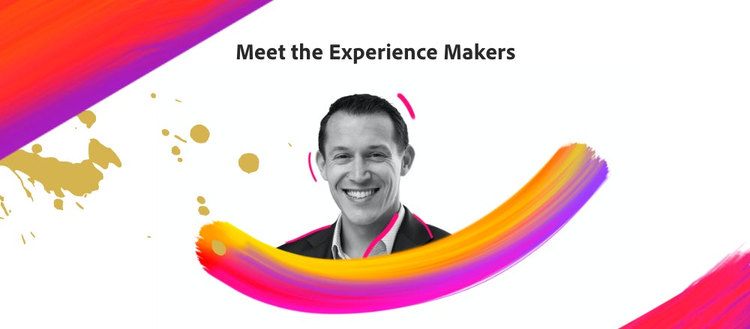
I recently asked the same question to Gavin Portnoy, vice president of strategic advancement & partnerships at the National Center for Missing and Exploited Children (NCMEC).
His team won this year’s Changemaker accolade at the Adobe Experience Maker Awards, recognizing their ability to drive measurable social impact with the help of the Adobe Experience Cloud.
For Portnoy, the career “calling” to join NCMEC was quite literal.
“John Walsh, [host/creator of America’s Most Wanted] called me and said, ‘I need you to get off your butt, stop selling advertising, and start making a difference.”
(The two had worked together on the long-standing TV show in the past.)
Thus began Portnoy’s tenure at NCMEC, a non-profit, private 501(c)(3) corporation with a mission to find missing children, reduce child exploitation, and prevent child victimization.
With the help of Adobe solutions and consulting expertise, the NCMEC team was recognized this year for a revitalized digital experience that helped all stakeholders take critical action, faster.
Watch my full interview with Portnoy below to learn how the NCMEC team approached digital transformation at such a remarkable social impact organization and read on for some of my key takeaways.
Digital experience and literacy at the core of the work
For an organization battling an ongoing social issue for the last 36 years, staying current meant putting the digital experience at the very core of their work. The team has recently been laser-focused on evolving to the digital era, especially with regards to its website and digital assets.
“We gave the digital media and communications program a B12 shot,” Portnoy described, as he told me about the extensive partnership between Adobe and NCMEC.
Prior to its move to Adobe Experience Manager running on Microsoft Azure, the website was built on home-grown technologies, an on-premise server in an attic.
The team worked alongside Adobe consultants to uncover opportunities for improvement, including a redesign on a new, responsive website that reduced their bounce rate from over 90% to 7%, increased total website page views by nearly 48% in the first three months, and with enhanced efforts drove 218% more traffic to donation and fundraising pages.
Adobe Photoshop is also used for age-progression and compositing techniques that have helped with the recovery of more than 3,000 lost children.
In 2019 alone, Adobe Experience Cloud was used to distribute the images and information of more than 29,000 missing children to more than 100 million people through their website, experiential and social media campaigns.
“We’re moving at lightning speed now,” Portnoy said.
Every channel matters to help bring kids home
“With nonprofit sites there’s a joke that you get what you pay for,” said Portnoy.
For this organization, one of the biggest challenges was serving multiple stakeholders.
Their stakeholders include donors who want to donate, those who need help for their child or need to make a report, someone who has seen a missing child and wants to leave a tip, or those who want to find resources for protecting their children. Additional audiences include law enforcement and the judicial system.
“We need to meet people where they are and serve all in the arena of child protection. We want people to find the information they need when they come to us.”
That’s a tall order for any one website, but this team rose to the challenge, ensuring relevant messaging and channel-specific experiences.
“We make sure what wherever the platform is, we’re changing the voice as appropriate,” he explained. “We make sure there’s a clear divide from the operational side (missing/exploited), and the donor and prevention side. It’s a tightrope that we walk. Tailoring the message to who the user is has been key.”
Their impact is significant
Portnoy gave some advice for the 2021 applicants of the Changemaker category:
“Really reflect on what you’ve changed. Be prepared to give analytics and be able to provide KPIs to explain what you’ve done.”
While many brands measure KPIs or the return on their investment in digital technology in terms of revenue and pipeline, at NCMEC, the mission is what underpins this story of digital transformation.
“It’s easy to get into the impact of web analytics or social media, but the reality is, more kids are coming home as a result of these technologies.”
Gavin Portnoy, vice president of strategic advancement & partnerships at NCMEC
If you, like me, are moved by NCMEC’s mission and feel compelled to donate, do so here. You’ll see the new site in action, and maybe even consider your own career calling.
Congratulations to Gavin and the whole NCMEC team, plus all the Adobe team members who have donated their expertise and technology to this critical organization.
As Portnoy explained, “We never stop until all kids are safe and protected.”
Honoring the movers and shakers. Learn more about the Adobe Experience Maker Awards.