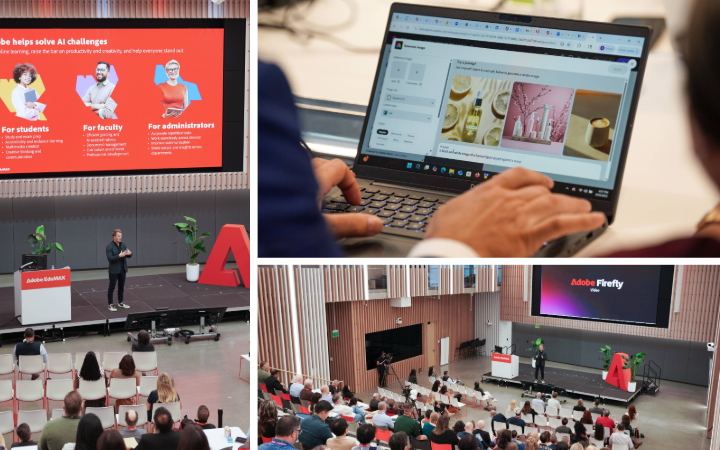
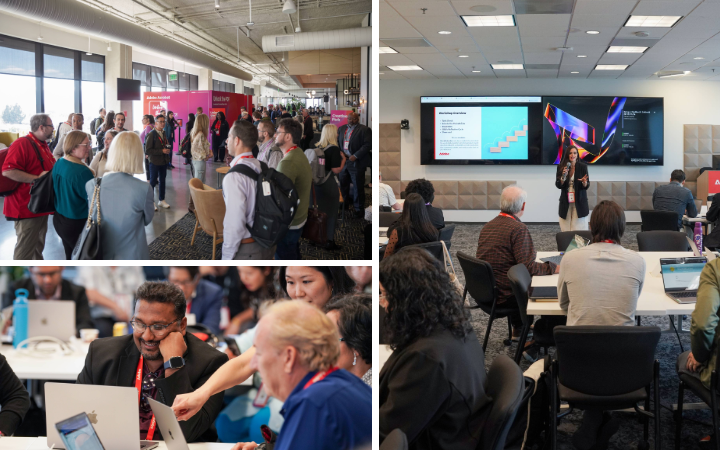
With the rapid adoption of AI in higher education, how educators teach and students learn is changing remarkably. Universities, administrators, and educators are trying as quickly as possible to integrate AI into instruction and student workflows in a responsible way that supports greater creativity and productivity and improves students’ readiness for careers.
Adobe is intent on helping the higher education community navigate the current AI crossroads. We want to create a safe AI-enhanced environment for teaching, learning, and academic exploration. By responsibly integrating generative AI into curriculum, we believe Adobe and educators together can move from the confines of the classroom to shape the future of learning and work.
AI on campus
AI is widely used on college campuses. According to our own research, 9 in 10 U.S. students use AI for their classwork. Students regularly use AI writing tools (55 percent), chatbots (45 percent), research tools (40 percent) and reading and document summary tools (33 percent). But they’re not entirely confident about it: 80 percent of college students surveyed are concerned that the generative AI tools they use for their courses provide inaccurate or misleading information.
Already considering their post-college prospects, 77 percent of the 1,000 students surveyed also say that colleges should offer AI skills classes to better prepare them for careers.
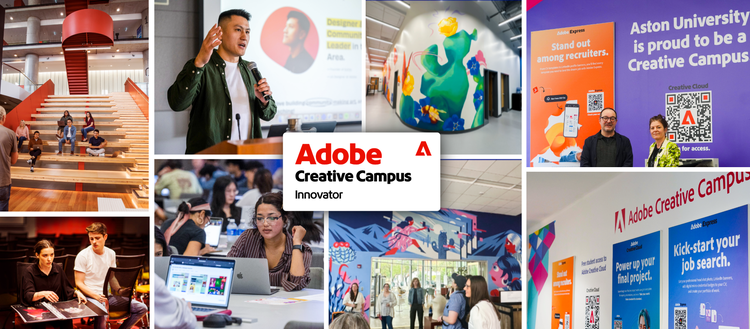
The growing network of more than 133 Adobe Creative Campuses support student learning and skills acquisition, improve faculty and administrator productivity and help lead institutional transformation. Creative Campuses do this by integrating AI-enhanced Adobe applications into workflows for teachers, administrators, and students. Tools like Adobe Acrobat Studio, Creative Cloud, and Acrobat AI Assistant fundamentally change the way faculty and students interact with documents, helping them move beyond simple reading to deep comprehension and creative expression, content generation, and communication.
This approach is yielding results. The Creative Campus program and the integration of Adobe applications lead to high student engagement. What’s more, 85 percent of students and 92 percent of early-career alumni agree that creative tools like Adobe’s help them build skills and experience for their resumes and portfolios. They’re spot on. Business leaders who are hiring have noted that they would rather have a candidate with AI skills than a candidate with a brilliant resume who has no experience with AI.
Empowering educators, administrators, and institutions with AI
Educators see the upside of AI in higher education. According to our 2025 Creativity with AI in Education report, 85 percent of faculty and teachers believe that generative AI boosts students’ creativity and creative thinking skills. But educators also want thoughtful integration and responsible use of generative AI in their curricula. That means using AI that’s built on a responsible AI policy, never trains on student data, and provides verifiable outputs through clickable citations, for example.
However, while students rapidly adopt AI, the speed of AI development is outpacing the ability of universities to implement clear policy and strategy. That leaves faculty hesitant and in need of support for grading and giving feedback on AI-assisted assignments. By the time they’ve hammered out a policy, AI has already shifted again.
We believe Adobe can help faculty and staff manage the workload and confusion surrounding AI integration. Tools like Acrobat AI Assistant and PDF Spaces can help faculty and staff get deeper, more accurate insights quickly from documents, automate routine tasks and streamline workflows. For administrators, PDF Spaces enable the creation of a repository of departmental information and provide the capability to interact with data at a higher level, which can help inform AI strategy and policy in real time.
For educators, these same tools support productivity by enabling efficient grading with AI-assisted rubrics, along with robust document management with streamlined editing, signing, and sharing. Adobe applications also help educators enrich curriculum by integrating AI for creative projects, and in general by fostering deeper engagement and interdisciplinary learning. Finally, Adobe applications support educators’ own professional development, by making it easier for them to explore innovative teaching methods and collaborate with peers in professional learning communities.
Preparing students for what comes next
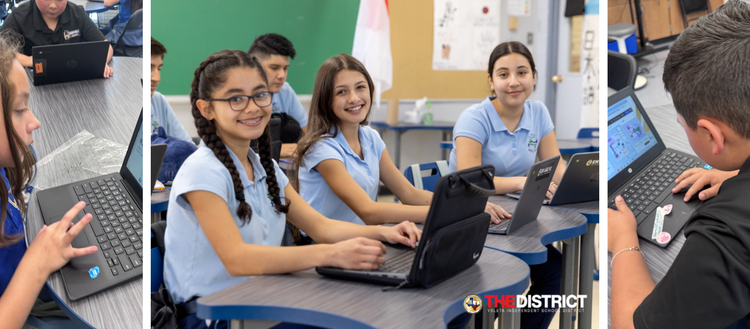
According to our research, 61 percent of students cite reading loads (on average more than 50 hours monthly on reading and study prep) as a top driver of burnout. Tools like Acrobat AI Assistant can help reduce the work and stress — and lower student attrition. Integrated into student learning and workflows, AI-enhanced Adobe applications can help students with study and exam prep, summarizing dense materials, organizing study guides, and clarifying complex concepts. The software also supports accessibility and inclusive learning, enabling students to engage with course materials in efficient, interactive ways, and with practical outputs like mobile-friendly and accessible PDFs.
We also want to encourage students to move beyond passive consumption to active creation, which builds skills necessary for future work or advanced academic pursuits. Adobe Studio, Creative Cloud, and Adobe Express allow students without design experience to create with industry-standard applications, producing multimedia content while sharpening their creative thinking.
These tools not only enable students to create and express themselves in their work, but they also help students develop the AI and digital skills they need to become part of today’s workforce – many who used Adobe applications in the classroom found jobs within six months of graduating. Students who become skilled with Adobe applications are more successful in finding employment after graduation: In a recent impact report co-authored with Edelman, 85 percent of students and 92 percent of early-career alumni agreed that creative tools like Adobe’s helped them build skills and experience for their resumes or portfolios. Furthermore, Creative Campus graduates report being hired faster, with business majors landing jobs 15 percent sooner than their peers.
Partnering to accelerate the integration of AI into higher education
Working together, Adobe, universities, administrators, and educators can bring AI safely and responsibly and ethically to campus, transforming learning and preparing students for the future of work. We know this partnership requires transparency and collaboration.
We look forward to working with institutions that are not yet part of the Creative Campus network. Together, we can build the foundation for a future in which creativity and career readiness are central, and AI enhances both teaching and learning.
To learn more, please visit Creative Campus