New Multi-Frame Rendering features now in After Effects (Beta).
Since we released Multi Frame Rendering for export in March, the team has been very busy making more of After Effects faster by using all the cores in your system. Today, we are pleased to announce that we now offer support for additional features in public Beta that promise to speed up your workflow even more.
Faster previews
Multi-Frame Rendering for Previews accelerates your creative process by taking advantage of your system’s CPU cores when previewing your compositions.
To super-charge your creativity further, we recently added Speculative Preview which helps you work faster even when you’re not working. While After Effects is idle — like when you’ve stopped to admire your beautiful design, check your email, or get coffee — your composition (and any pre-comps in that comp) will automatically render in the background meaning your designs are ready when you’re ready for them to play back.
Adobe After Effects
Make a big scene bigger. There’s nothing you can’t create with After Effects.
When it comes to rendering your compositions — especially to H.264 — Multi-Frame Rendering export from Adobe Media Encoder makes the most of your time at work by rendering multiple compositions in the background while you’re still working on others.
Notifications mean you can get on with other things while your compositions are rendering.
A long-requested feature is here at last as well. Render Queue Notifications gives you precious time back in your day, allowing you to confidently walk away from your computer for extended periods of time. After Effects will notify you when your renders are complete via the Creative Cloud app and notifications will display on your phone or smart watch.
Faster effects
After Effects has an insane number of effects and porting them to work on multiple cores was quite the challenge and has taken a lot of time. However, we continue to make progress and you’ll see many daily and weekly updates with more and more effects optimized throughout the Public Beta cycle from now until MAX, 2021.
To get a list of currently supported effects in After Effects optimized for Multi-Framed Rendering, check out our MFR FAQ page.
Partner plug-ins & hardware
Moving to multiple cores on a product that is as complicated as After Effects has been a long time coming. Many of our users are not seeing the performance gains they would like due to the extensive use of plug-ins in their workflow. This was expected since many partners began their optimization work during our in-beta cycle.
Rest assured that our partners are 100% with us, optimizing their plug-ins to support all system cores. We’ve created a “Multi-Frame Ready” logo which our partners can use to indicate which plug-ins have been optimized. Look for the MFR-ready logo on their website.
Many of our system manufacturers are working on system recommendations as well. This will help you get the most out of After Effects by knowing which system best meets your design needs. Once these recommendations are released, we will update this blog with links so you can research possible upgrade scenarios that will benefit your workflow.
I want to personally thank you for helping the After Effects team to make Multi-Frame Rendering benefit all users’ workflows. We truly appreciate any time you can give us to test how MFR is working on your system. So please download the Beta and let us know how it is working for you.
Multi-Frame Rendering now in After Effects Beta. Our goal is to ensure that every After Effects user will see performance gains on their system.
03-10-2021
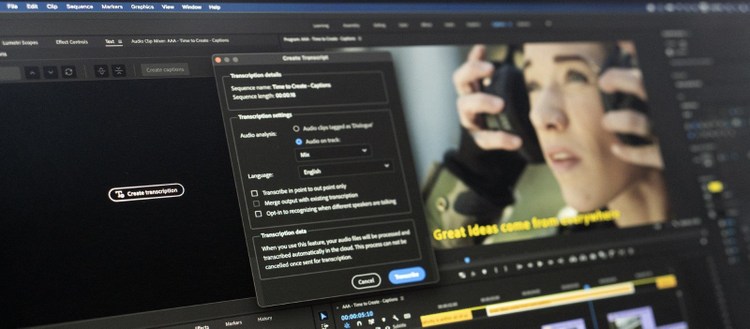
Speech to Text and Native M1 performance on Mac now available in Premiere Pro
Adobe Premiere Pro is the only video editing software offering integrated & automated ways to create transcriptions and captions. it’s all included with your Creative Cloud subscription.

Embrace the manifold collage of the internet with Media Replacement
The style of videos and moving images we consume looks like a collage of design. Dive into the trend the Stock team calls Media Replacement.
04-26-2021
Cookie Settings
General information
You can control how Adobe websites use cookies and similar technologies by making choices below. But note that if you disable cookies and similar technologies entirely, Adobe websites may not function properly.
Cookies are small text files stored by your web browser when you use websites. There are also other technologies that can be used for similar purposes like HTML5 Local Storage and local shared objects, web beacons, and embedded scripts. These technologies help us do things like remembering you and your preferences when you return to our sites, measure how you use the website, conduct market research, and gather information about the ads you see and interact with.
You can make choices in the menu below about what cookies and other technologies you want us to use on Adobe sites when you visit them from this browser. You can always change those choices later by clicking on the Cookie Preferences link at the bottom of the page.
If enabled:
We can improve your experience by tailoring the site and the content to things we think might be of interest
We can better keep track of your preferences — like what language you prefer to use
We will better understand your likely interests so we can provide you more relevant Adobe ads and content on non-Adobe websites and in non-Adobe apps
It will help us improve the performance of our website and those of our partners who use the Adobe Experience Cloud
If disabled:
We won’t be able to remember you from session to session so the experience may not be tailored to your interests
You’ll still have access to the content of the site but certain features that depend on cookies may not function
You’ll still see ads, they just may not be as relevant to you
General information
You can control how Adobe websites use cookies and similar technologies by making choices below. But note that if you disable cookies and similar technologies entirely, Adobe websites may not function properly.
Cookies are small text files stored by your web browser when you use websites. There are also other technologies that can be used for similar purposes like HTML5 Local Storage, web beacons, and embedded scripts. These technologies help us do things like remembering you and your preferences when you return to our sites, measure how you use the website, conduct market research, and gather information about the ads you see and interact with.
You can make choices in the menu below about what cookies and other technologies you want us to use on Adobe sites when you visit them from this browser. You can always change those choices later by clicking on the Cookie Preferences link at the bottom of the page.
If enabled:
We can improve your experience by tailoring the site and the content to things we think might be of interest
We can better keep track of your preferences — like what language you prefer to use
We will better understand your likely interests so we can provide you more relevant Adobe ads and content on non-Adobe websites and in non-Adobe apps
It will help us improve the performance of our website and those of our partners who use the Adobe Experience Cloud
If disabled:
We won’t be able to remember you from session to session so the experience may not be tailored to your interests
We’ll still count your use of our site and services
You’ll still have access to the content of the site but certain features that depend on cookies may not function
You’ll still see ads, they just may not be as relevant to you
Operate the site and core servicesOperate site and measure engagement
Always active
These cookies are required, and they are used to enable the site and related services core functionality. Without them the site could not operate, so they cannot be disabled.
These cookies enable the site and related services’ core functionality and collect statistics about user engagement, such as counting active use to help us understand trends. These cookies cannot be disabled.
Measure performance
These cookies are used to analyze site usage to measure and improve performance. Without them Adobe cannot know what content is most valued and how often unique visitors return to the site, making it hard to improve information we offer to you.
These cookies are used to analyze site usage to measure and improve performance. Without them Adobe cannot know what content is most valued, making it hard to improve information we offer to you.
Extend functionality
These cookies are used to enhance the functionality of Adobe sites such as remembering your settings and preferences to deliver a personalized experience; for example, your username, your repeated visits, preferred language, your country, or any other saved preference.
Personalize advertising
These cookies are used to enable Adobe and our partners to serve ads more relevant to your interests. Without them you will still see ads, but they might not be as relevant to you.