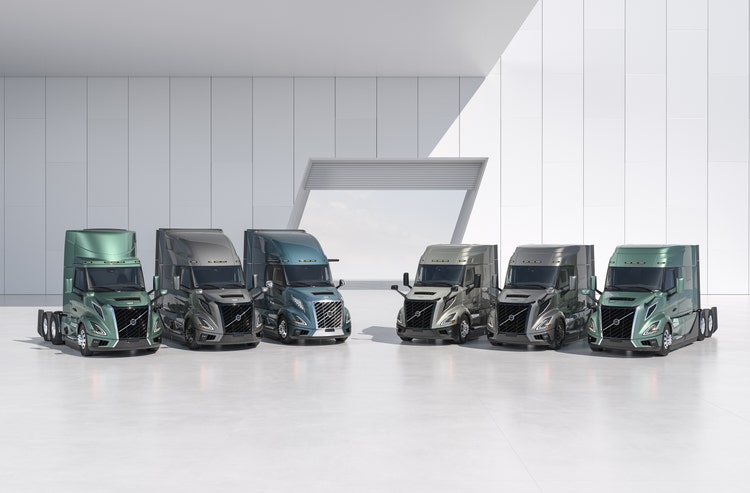
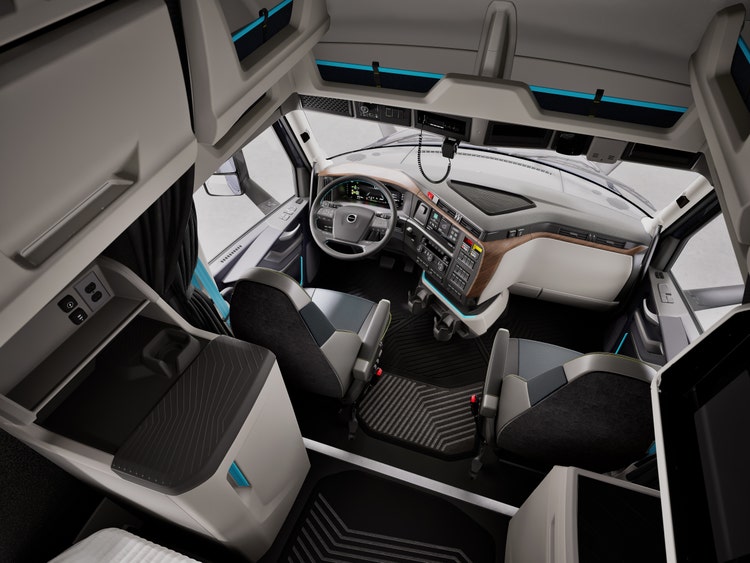
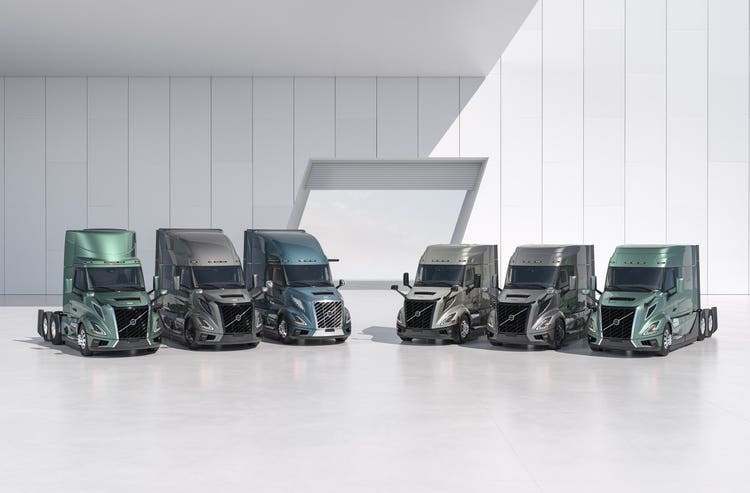
For the launch of the all-new Volvo VNL in North America, Volvo Trucks turned to product experience studio Rapid to reimagine how vehicles are brought to life digitally. Truck buyers today expect more than a spec sheet, and the customer journey begins before they ever step into a dealership. Therefore, Rapid built a robust digital twin pipeline that supports every stage of the product lifecycle: from early design visualization and marketing imagery to online configurators, AR/VR experiences, and even safety, training and learning materials.
The all-new VNL launch became a milestone in how digital twins, high-fidelity digital representations of physical products, can transform both storytelling and business outcomes. The real-time configurator drew millions of interactions and thousands of qualified leads within weeks, while the same assets continue to fuel new content as product updates roll out. Within this workflow, the Adobe Substance 3D tools played a vital role in material creation, enabling designers to craft photoreal textures, ensuring consistency across platforms and render engines.
Liam Keating, creative lead at Rapid: I joined Rapid as a creative lead after four years as a visualization designer at Volvo. My role is quite varied, but I am mainly working on pitching ideas and creative content with less of a focus on technical and 3D art.
Johanna Langegård, senior material artist at Rapid: My role is to create high-quality, photorealistic materials for both real-time experiences and offline rendering. Most of my work happens in Substance 3D Designer and Painter: tools that let me dive into the fine details, dial things in just how I want them, and keep iterating until the material feels alive.
Bridging design and technology
Keating: Rapid is a product experience company founded in 2005 in Gothenburg, Sweden, with a team of around 100 people across Europe and the US. We specialize in helping companies digitize the full product lifecycle, from early CAD visualizations to configurators and aftermarket tools. To do this, we create highly detailed digital twins, everything from washing machines to full vehicles.
Digital material creation is one of our specialties: we make everything from photorealistic fabrics to real-time shaders. Each material plays a crucial role in expressing a brand’s identity, translating design language, values, and craftsmanship.
In 2022, we took on a unique project with Volvo Group to launch the new VNL truck with Volvo Trucks North America. This was a new truck designed from the ground up in the USA, with brand-new architecture and aerodynamics. We created a highly powerful and photorealistic digital twin pipeline containing tens of thousands of assets and photorealistic materials authored in Substance 3D. This allowed us to produce the first-in-class heavy duty real-time truck configurator with Unreal Engine and photoreal marketing and launch assets.
The power of digital twins
Keating: With a full digital twin pipeline, the possibilities open up for almost any type of digital content. While we started with a configurator in mind, we have gone on to produce high-quality imagery, safety and features animations, photorealistic content as well as AR & VR used for training and learning materials.
Spending the time to author the materials in Substance 3D allows us to reuse and adapt materials for all these different avenues and essentially futureproofing us for any content we plan in the future.
Langegård: Substance 3D and Unreal Engine work seamlessly together, the former for crafting realistic materials, the latter for presenting them in real-time. Photorealism carries over perfectly, so what we create is exactly what people see.
Whether it’s for a still in V-Ray, lookdev in Blender, or an interactive configurator in Unreal Engine, the materials stay consistent. This workflow lets us iterate fast, respond to feedback, and keep everything accurate from start to finish.
The impact of the Volvo VNL launch campaign
Keating: When the VNL truck configurator was launched, the data gave us valuable insights into customer behavior, showing which features they explored, how long they engaged, and where their interest was strongest.
These insights confirmed that the configurator actively supports the customer's journey by making it easier to understand and personalize the product. With Substance 3D powering the material creation, we ensured that the digital representation matched the physical product down to the smallest detail, enhancing customer confidence and engagement.
We saw a clear increase in qualified leads, proving the configurator’s value for driving tangible business results. It gives us a strong foundation to keep improving the experience for future launches. Here are some of the key metrics we saw just after launch:
- Peak of 2000 configurations per minute
- 20,000 configurations in the first hour
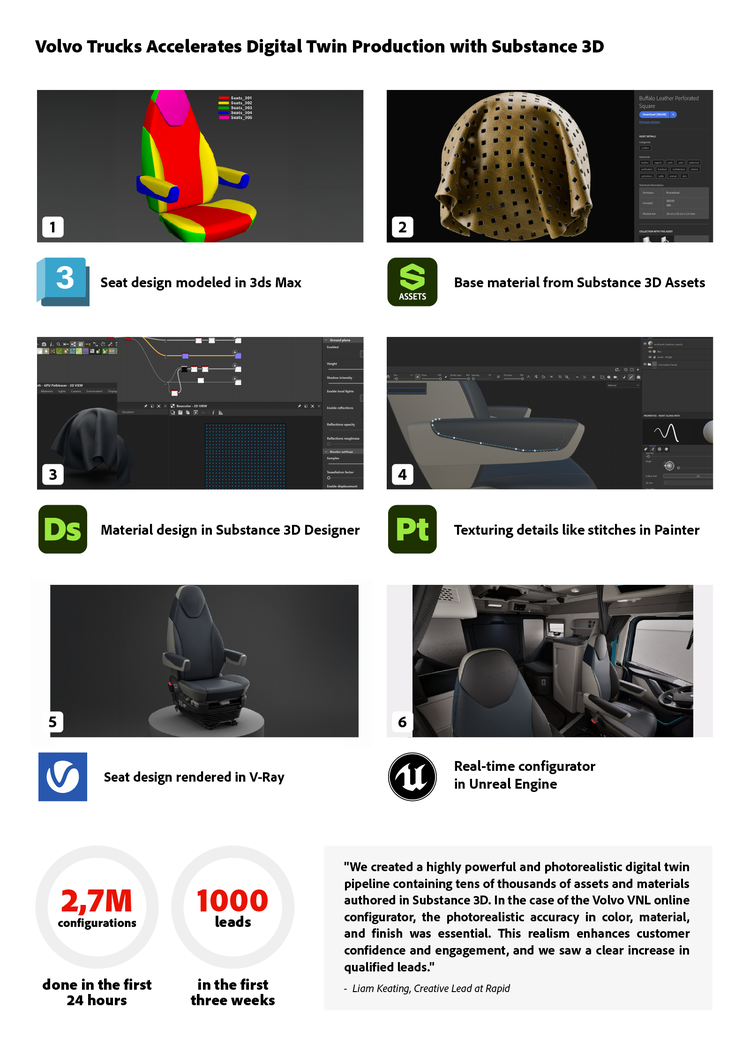
- 2.7 million configurations done in the first 24 hours · 320 leads in the first 48 hours
- 1000 leads in the first three weeks
Building the pipeline with Substance 3D
Keating: We use 3ds Max primarily for preparing geometry, which we receive as CAD files from the customer. We use V-Ray for rendering the marketing images. Blender is used for internal look development as well as production work. No matter which tool we’re using, Substance 3D integrates seamlessly with all of them, creating a visual and photorealistic continuity of materials across all assets and use cases.
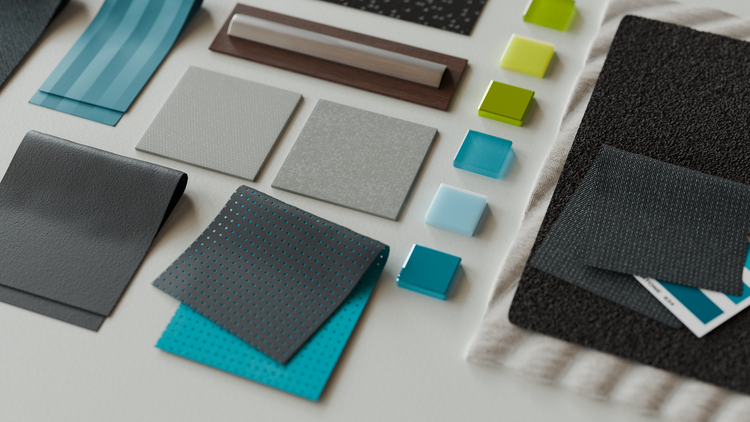
Langegård: The Substance 3D tools have been essential in creating highly realistic digital twins of Volvo’s materials. The CMF (Color, Material, Finish) team invests enormous effort into crafting award-winning designs, and it’s our job to represent those designs in the digital space with the same level of quality and detail.
: Substance 3D Designer’s procedural and non-destructive workflow gives me the freedom to experiment, iterate, and explore creative ideas without limitations, stay adaptable throughout the process, and keep results consistent.
For example, I’ll begin by creating a single leather material, either from the ground up in Substance 3D Designer or by downloading a similar base from Substance 3D Assets and customizing it. From there, I can iterate and produce multiple variations using the same foundational graph. This approach allows us to match the physical master samples perfectly while saving time.
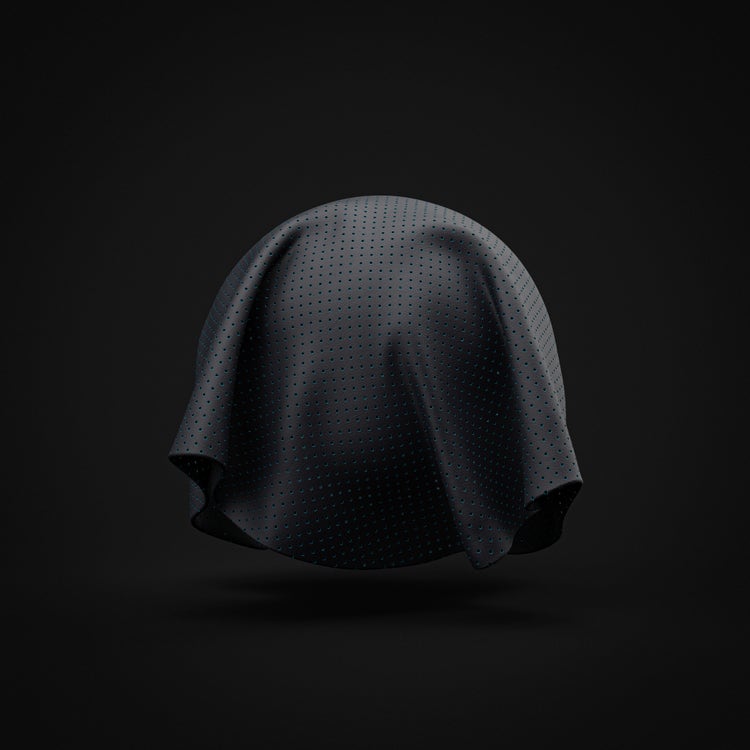
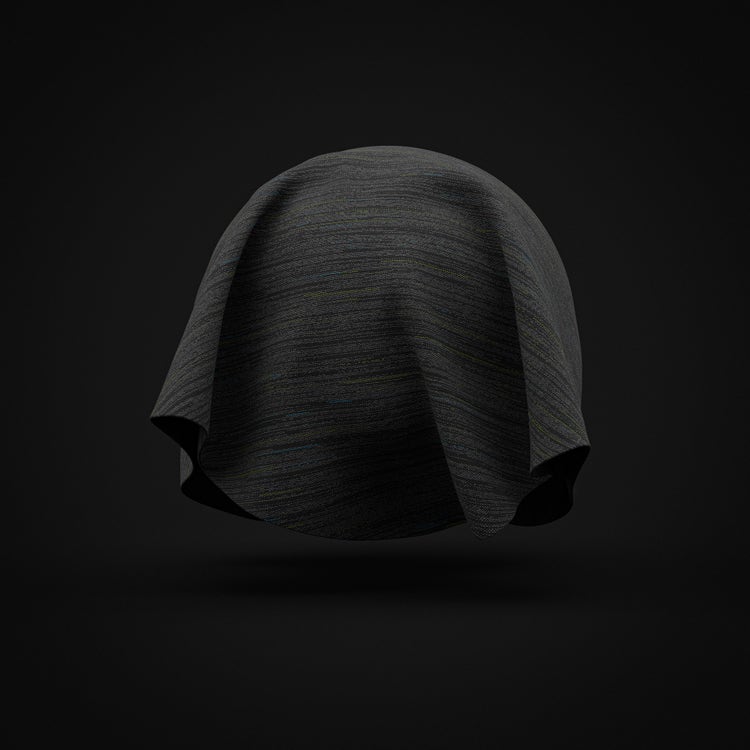
Materials rendered in Substance 3D Designer
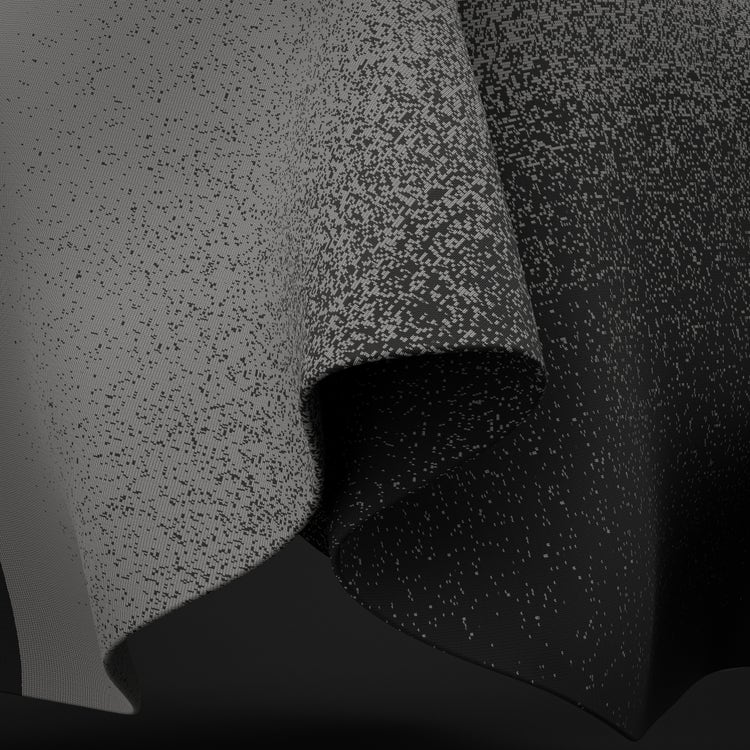
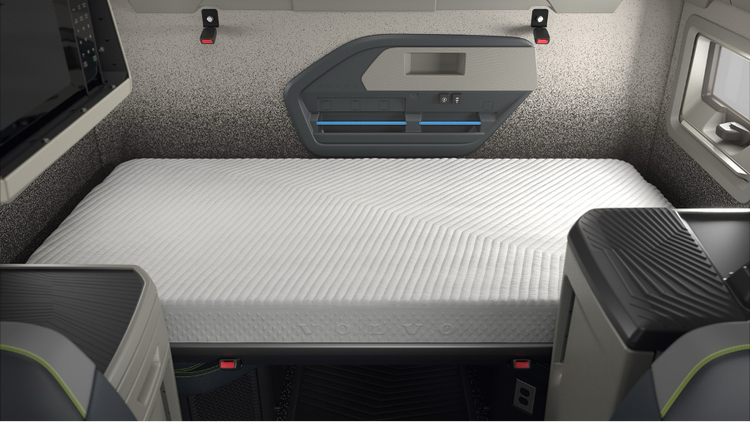
We asked Langegård to explain her process in making a knitted textile designed for the walls and panels in the truck’s living area.
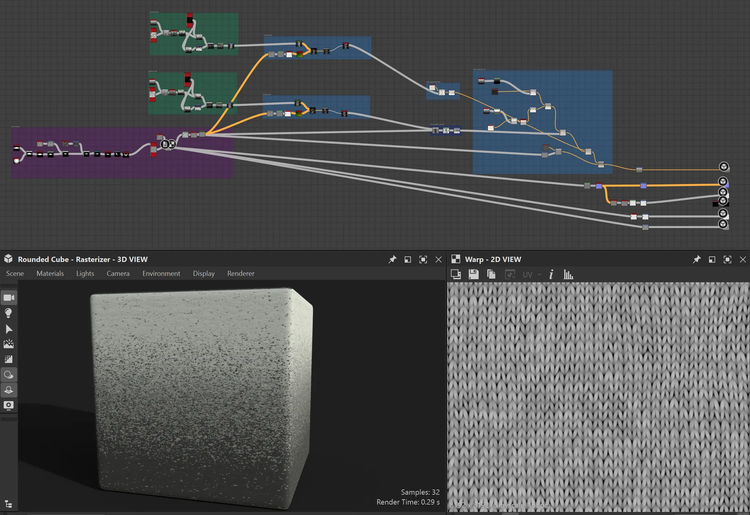
Weaving a knitted textile in Substance 3D Designer
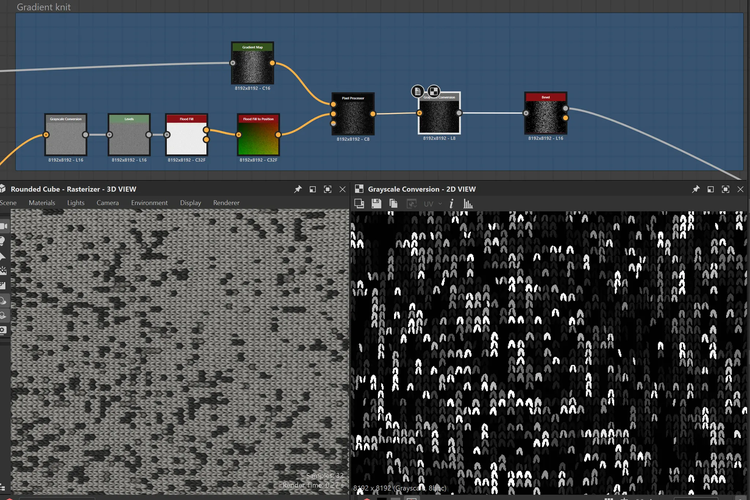
The physical sample is a knitted textile; it features a complex jacquard structure where the pattern transitions across the surface. It starts with a dark background and light speckles at one selvedge, gradually shifting to a light background with dark speckles at the other.
- Frame grouping by function (Base shapes, masks, functions, color-blends etc).
- Color-coded frames for better readability.
- Output nodes collected to the far right.
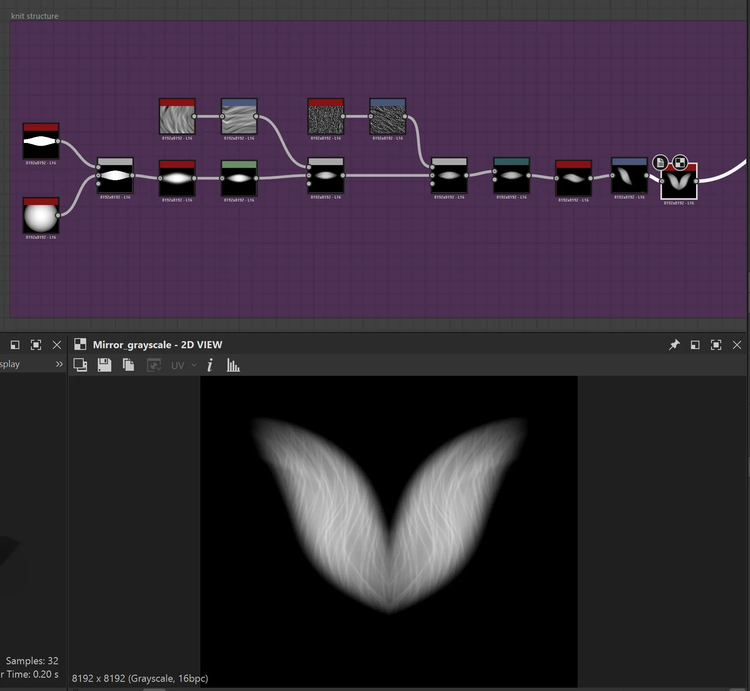
I begin by building the base shape, a knitted stitch. Starting with a simple Shape node, I gradually refine it by bending with a Swirl node and layering in noise to create some fibers.
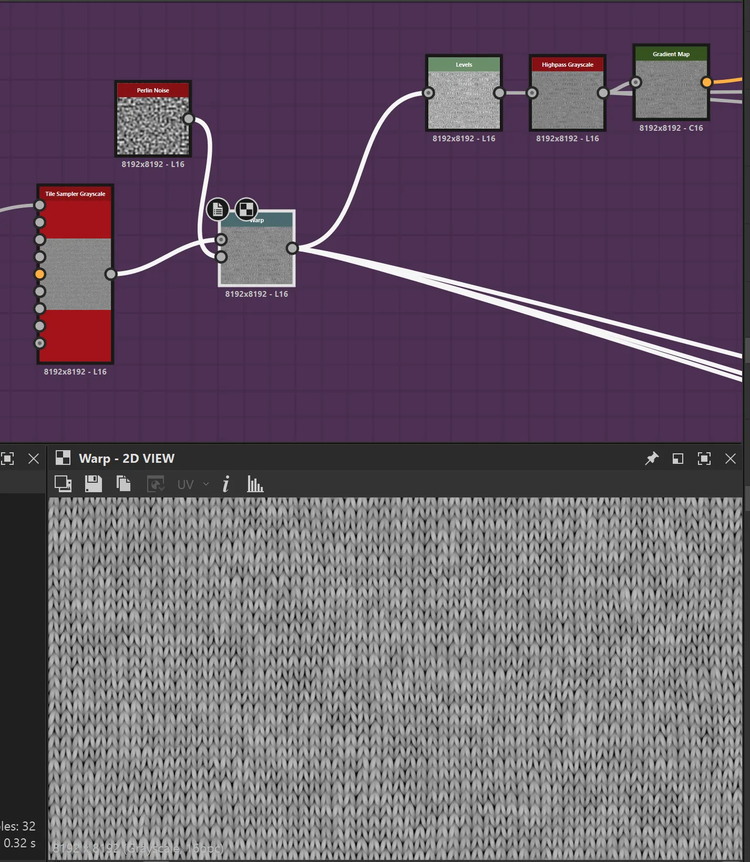
From there, I plugged it into a Tile Sampler. It offers so many parameters to tweak and play with. Small irregularities like slight rotations, random scale, or subtle color variation make a huge difference.
To push realism further, I add a subtle Warp. Even with machine-made knits, the wales aren’t perfectly uniform; tiny shifts in yarn tension give them a gentle wobble that makes the fabric feel more authentic.
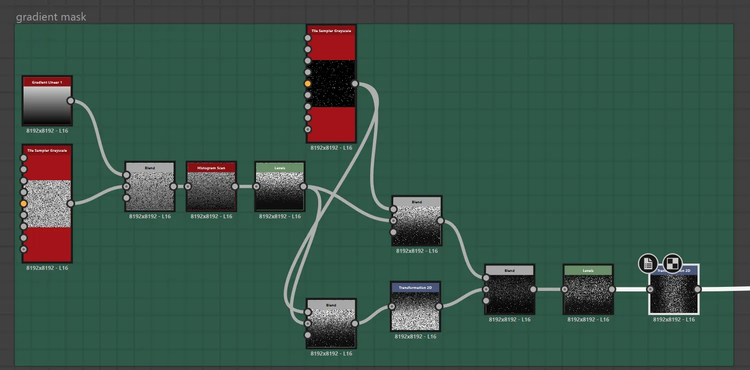
Basically, this is very simple; it's just noise made with the standard square shape using the tile sampler, blended to create the transitions of speckles.
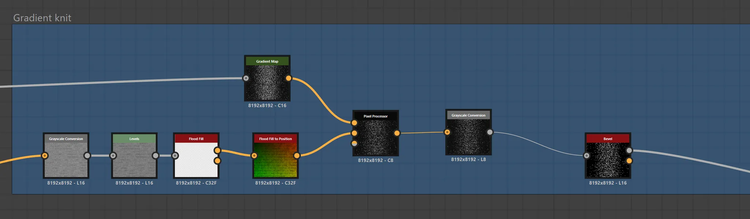
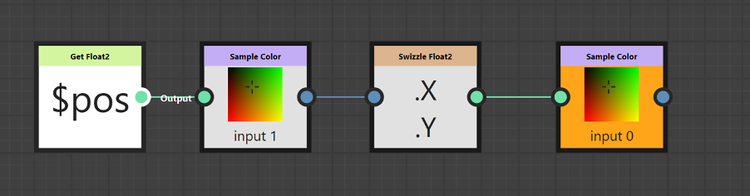
This is where the magic really happens. The gradient from the previous step becomes a guide for the Flood Fill nodes and Pixel Processor, helping to pinpoint the placement of all those little speckles. In simple terms, each square corresponds to a knit shape, which lets me colorize them and make sure the color follows the stitch itself.
The trickiest part was nailing the background gradient. It had to be sharp enough to avoid a muddy, blurred zone, but still smooth enough that it wouldn’t leave a visible line. In the real textile, the yarn colors are simply reversed in the knitting.
Our long-term goal is to build a complete in-house material library, with graphs that have exposed parameters. This means that even colleagues who don’t work directly in Substance 3D can pick up an .sbsar file, adjust a few values, and get exactly what they need. It’s an approach that keeps us agile, speeds up production, and boosts efficiency across the entire studio.
The collaboration between Volvo Trucks and Rapid shows how digital twins are reshaping the way complex products are designed, marketed, and experienced. By combining a flexible real-time pipeline with photorealistic materials created with Adobe Substance 3D, the team has established a future-ready workflow that continues to evolve with every new launch. From photoreal materials to immersive configurators, this approach accelerates content creation and strengthens the connection between brand, product, and customer, driving innovation far beyond the showroom floor.
For a deeper dive into Volvo Trucks’ journey toward more connected, digital product experiences, explore how Volvo Trucks integrated Adobe Experience Manager Sites to unlock faster content delivery and superior website performance.