AI has the power to supercharge human creativity — or upend the very creative economy it depends on. The choices policymakers make now will determine whether AI fuels future economic growth or erodes the fundamental incentives of creative work.
At Adobe, we believe the path forward means using AI to supercharge productivity, creativity and the creative economy as a whole. AI can bring enormous economic opportunity and growth for everyone from individual creators and small business to the most iconic American brands. For more than four decades, Adobe has built tools that empower creativity. We see AI not as a replacement for the human imagination or human creativity, but as an amplifier, helping people dream bigger, build faster and work smarter.
But in order for AI to deliver upon this promise, we need to keep humans at the center of creativity, build an AI-ready workforce and make sure that the right public policies are in place.
Empowering human-powered creativity in the age of AI
The creative economy is too important to ignore. In fact, the arts and cultural industries contribute $1.2 trillion, about 4.2 percent of U.S. GDP, to the U.S. economy each year. Creativity is not a niche sector — it’s a pillar of American prosperity and cultural leadership. Creators play a powerful role in fueling the economy but they’re facing an erosion of control and credit in the age of AI.
We need to give clear rights and meaningful control for creators in three critical areas so that they are able to thrive.
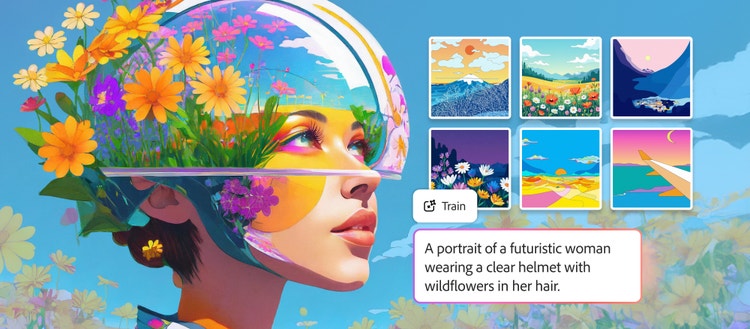
- New tools need clear paths to protection. When creators use AI as a tool — the same way paintbrushes or cameras are used — and exercise creative judgment, that work deserves protection. The technology used should not determine eligibility; the human authorship behind it should. What’s needed now is a clear, straightforward path for creators using AI to secure copyright. Without it, we risk slowing down the broader creative economy and stifling new forms of creative expression.
- Protection against AI-driven impersonation. Beyond copyright, policymakers must address the misuse of AI to replicate an artist’s distinctive style for commercial gain. Adobe has proposed an anti-impersonation right designed to hold bad actors accountable when AI is used to unfairly compete with creators in the marketplace, while still preserving legitimate artistic influence and stylistic evolution. It’s a simple concept — and one that can be adapted for copyright frameworks around the world.
- Meaningful ways for creators to signal their preferences around AI training. Creators also need practical ways to manage how their work is used in AI training. Standardized technical tools such as Content Credentials allow creators to signal their preferences through tamper-evident metadata attached to individual pieces of content, and that can travel with that content across platforms.
Future-proofing the workforce for an AI economy
AI is transforming the workforce at an unprecedented pace. Across every industry, AI is reshaping job roles, redefining required skills and changing how work gets done. To prepare both the current workforce and next generation for this reality, we must ensure that every learner develops the creative and technological fluencies that will be needed now, and in the future.
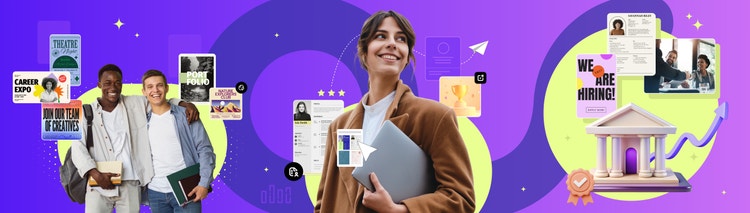
Future-proofing the workforce begins in the classroom. AI literacy and hands-on experience with emerging technologies should not be optional or reserved for a select few — they must be embedded into curricula everywhere. Adobe is committed to empowering every K–12 student in the U.S. with free access to our classroom-ready AI tools and every U.S. teacher with training and resources to build the essential AI skills that will fuel America’s future growth and AI-powered economy.
When students and teachers have access to the right AI tools, they can broaden their thinking, expand their perspectives and unlock new forms of creativity. Equipping young people with these capabilities helps ensure they’re able to thrive in a rapidly evolving economy.
As AI transforms industries, those who are already in the workforce also need access to the tools and skills that will help them succeed. At Adobe, we see creation and creativity as one of the keys to learning. When learners are empowered to create, they become more engaged, more intentional, and better able to master complex concepts. Through Adobe Digital Academy, we are aiming to equip 30 million learners and teachers with the AI literacy, content creation and digital marketing skills they need to thrive in the modern workforce.
Smart, cohesive public policy
We stand at a pivotal moment. The policy choices being made now will determine whether AI becomes a source of societal friction or a powerful engine for inclusive economic growth, productivity and job creation.
Regulation is not inherently a threat to AI innovation — but fragmentation is. When states and other countries pursue sharply divergent rules, they create unnecessary barriers and compliance costs that make it harder for developers from global enterprises to early-stage startups to scale responsibly.
Policymakers should seek consensus on the broad strokes of an approach to AI policy that encourages responsible innovation. That means thoughtful collaboration between state and federal policymakers so that the country doesn’t become a patchwork of disparate policies holding opportunity back. It also means moving away from one-size-fits-all rules that assume all AI systems pose the same level of risk, and seeking targeted regulation that ensures innovation can continue to thrive, particularly for low-risk AI applications. In other words, context matters.
A risk-based, use-case-driven approach applies safeguards proportionate to demonstrated, real-world harms. Furthermore, governments do not need to start from scratch. Existing frameworks such as laws around consumer protection, fraud prevention, cybersecurity and product safety already address many of the underlying risks associated with AI. These can and should be adapted, rather than replaced with entirely new regulatory structures.
The path forward
We are at an inflection point for technology policy in the U.S. and around the world. If we get this right, AI can become a catalyst for human creativity, economic growth and broad-based opportunity. But that future will not happen by accident. It requires a clear commitment to empowering creators, equipping workers and students with future-ready skills and advancing thoughtful, globally aligned policies that enable responsible innovation.
There's no doubt AI will shape the future of creativity. The question is whether we will shape AI in ways that preserve human creativity and agency, and sustain the economic foundations of creative work.
The path forward is not about choosing between innovation and protection. It is about building an ecosystem where both thrive, so that the benefits of AI can be realized for individual creators and entire economies alike.
This article was originally published by the Washington Post Creative Group.