Agentic technology — AI that can make decisions, carry out complex tasks and work autonomously — is sparking a familiar debate that’s rekindled each time we meet a transformative technology. From the printing press and the camera to the personal computer and digital imaging software, the questions are different but the controversy is always the same: will new technology serve people or replace them? Artists always answer these questions by creating. What begins as controversy becomes craft. Craft becomes culture.
Will this happen again with agentic AI? Will it elevate the role of creators? Yes, but only if agentic-powered creative tools keep humans in the loop. That’s not a given; many companies see agentic AI as a replacement for human creativity.
We see things differently at Adobe. Our belief is that agentic AI should serve human creativity, making creation more accessible, expressive and powerful than ever before. We’re developing a new Adobe creative agent, a new way of working that empowers you to become the creative director of your own story. You set the vision, apply your taste and make the calls that only you can make. The creative agent will help you carry forward your vision by orchestrating various models, tools and production processes, reaching across applications to complete all sorts of tasks that previously took vastly more time and effort.
Our creative agent is all of Adobe’s magic in a single wand. It distills Adobe’s four decades of creative technology and intelligence into a single agentic interface. It’s available whenever you need it and however you work: through our new Firefly AI Assistant, inside our apps or even within other companies’ chatbots and platforms.
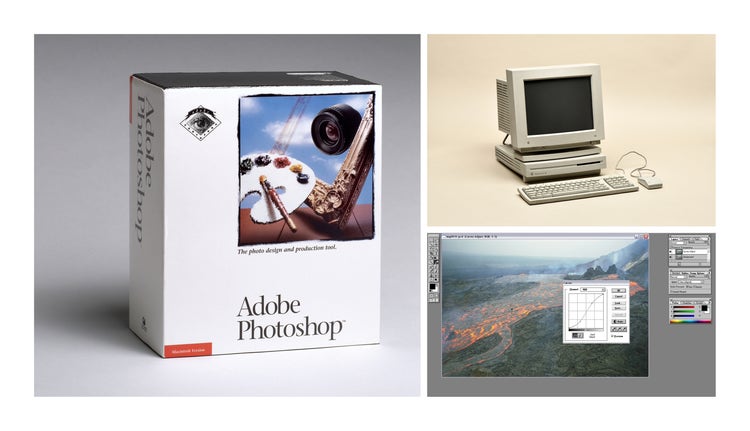
Adobe first revolutionized digital creation when the graphical user interface, bitmaps and advanced processors emerged. We built tools grounded in how creators work, empowering them to amplify their creativity. Today, we're revolutionizing digital creation again, combining advances in agentic and generative AI with our four decades of understanding creatives, to fundamentally reshape how creative work gets done.
As you guide the Adobe creative agent toward your vision, the distance between what you can imagine and what you can create shrinks dramatically. Your ideas — your unique perspective, your voice, your taste — become the most powerful creative instrument of all.
For example, a designer building a personal brand could start exploring concepts in Adobe's Firefly Boards ideation surface, turn ideas into concepts with Adobe Illustrator, generate video content, then ask the creative agent to suggest ideas for marketing materials and the copy to go with them. A YouTube camera reviewer might start in Adobe Firefly with a simple description and preferred mood. The creative agent would analyze hours of footage, propose a story arc, suggest music, assemble a draft edit and generate thumbnails and social cutdowns. Ultimately, the creator would set the tone, make judgment calls and shape the final edit.
This is a generational change in how we interface with computing. For decades, digital creativity has been shaped by pointing, clicking and tapping through precise, pixel-level edits. You open an app, perform a task, move to another app and repeat. These methods unlocked a new era of art, ideas and expression, leaving an immeasurable mark on culture and communication. The canvas became the screen; the brush became the cursor. Yet digital creativity, however expansive, remained tethered to the mechanics of software, demanding the same level of control whether you were crafting something deeply personal or grinding through a tedious task.
Of course, there are many things that require your direct touch; times when you need the richest levels of power and precision. So as we develop our creative agent, we’ll always give you the opportunity to take the wheel from AI, seamlessly stepping into pixel level details. Balance the composition and layout. Harmonize elements and graphics. You’ll always have unmatched power and precision using Adobe tools.
For those times when you just want to express your idea and see it come to life, we give you an alternative to menu-based pointing-and-clicking. We’re empowering you to think more in stories: what you want to say, how you want it to look and sound, what you want your audience to feel.
Tomorrow is today: Bringing Adobe’s creative agent to Adobe apps
We laid the groundwork for the Adobe creative agent by embedding generative and conversational capabilities into products like Adobe Acrobat, Express and Photoshop, with new conversational tools coming soon to Illustrator, Lightroom and Premiere. We built these experiences so you can work conversationally to direct how you want your work to look and feel. Which color scheme you want. How the mood and tone should feel. Which emotion you’d like to evoke. And when you want to go deeper, the full power of Adobe's professional tools is right there, so you can step seamlessly into precise, hands-on control. Because no matter where you start, when precision matters — when craft matters — you want the power of these tools ready and waiting.
I want to share more about our plans on how the Adobe creative agent will surface in virtually everything we develop.
Firefly AI Assistant
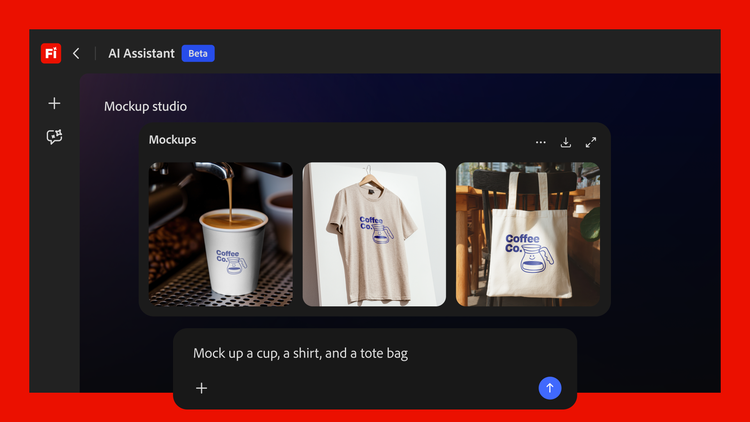
We introduced a new Firefly AI Assistant, powered by our creative agent, that works across our Creative Cloud apps to orchestrate and reason in multi-step, complex workflows. This is a paradigm shift. A fundamentally new way of working in the age of creative agents that ushers in the rise of the creative director.
Firefly AI Assistant will put the combined power of all Adobe's signature creative tools in one place. It's creativity without borders. When fully realized, you’ll edit video with Oscar winners’ favorite Adobe Premiere tools, enhance audio with innovations from Firefly, reimagine stills with imaging tools from Photoshop and create beautiful vector-based title cards with capabilities from Illustrator. All in the same conversational interface. All by directing the agent in your own words, while AI helps plan, assemble and orchestrate the work to bring your vision to life. And when you're ready, you’ll ask Firefly AI Assistant to help you share your work for review and collect feedback.
We're bringing this vision to life in a way that's unique to Adobe, drawing on our decades of understanding how creative work unfolds: the tools, the workflows, the relationships between assets. Firefly AI Assistant will be available inside the Firefly app in a few weeks.
Acrobat & Express
Our creative agents will also make it’s way into Acrobat and Express. AI Assistant in Adobe Acrobat uses a combination of large language models, proprietary document AI and our creative agent, to make it quick and easy to pull insights from documents and turn them into visual communications like presentations, infographics, audio overviews and videos.
Expanding agentic creativity to the enterprise
Modern marketing teams are under pressure to produce more content, refresh it faster and maintain brand consistency across formats, markets and channels. Creative work in the enterprise is a collaboration between creators and marketers. Our vision adds a third partner: the agent. Marketers provide the direction. Creatives own the craft. Agents handle the grind.
Enterprises can leverage the creative agent to help find existing content that can be reused for a campaign, make quick edits based on stakeholder feedback and generate variations for campaign personalization or localization. And over time our creative agents will become even more powerful as they develop a deeper understanding of a brand's creative history. We’ve started bringing this to life in Firefly Creative Production.
We're also taking these capabilities beyond our own ecosystem. We’ve brought the magic of Adobe’s tools — including Acrobat, Express and Photoshop — to conversational interfaces like ChatGPT and Copilot, with more on the way. Whether you're a Photoshop whiz or have never opened one of our apps, you can browse templates, edit images, work with PDFs and more, without ever leaving the platform you're already in. And as we build out Firefly AI Assistant, we’ll give you the option of accessing its capabilities in popular third-party AI models like Anthropic’s Claude.
One future, two directions
At its best, agentic technology expands creativity. It lets people bring their vision to life simply by explaining it. Instead of navigating menus and tools, you create at the speed of your imagination. The art of creation becomes more personal, expressive and inclusive.
At its worst, agentic creation produces uniformity and AI slop, taking both the human and the humanity out of the creative process. Multiply this out and audiences' tastes grow stale. Self-expression becomes a novelty. Authorship loses meaning as it becomes harder to tell who created what, or whether anyone created it at all. Everything ends up too “perfect,” too frictionless, too forgettable.
At Adobe, we're building toward a future where creativity expands rather than contracts. Where more people can express themselves in more personal ways. Where anyone can be their own creative director and the world experiences a creative renaissance. A future where human creativity matters more than ever.
We've never been more excited about the future of creativity.