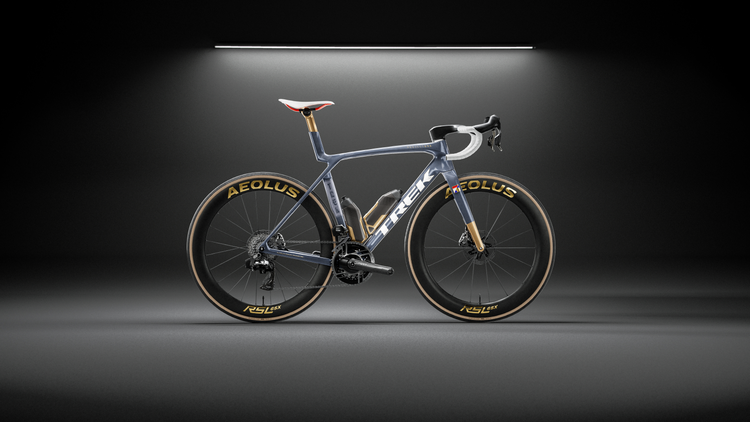
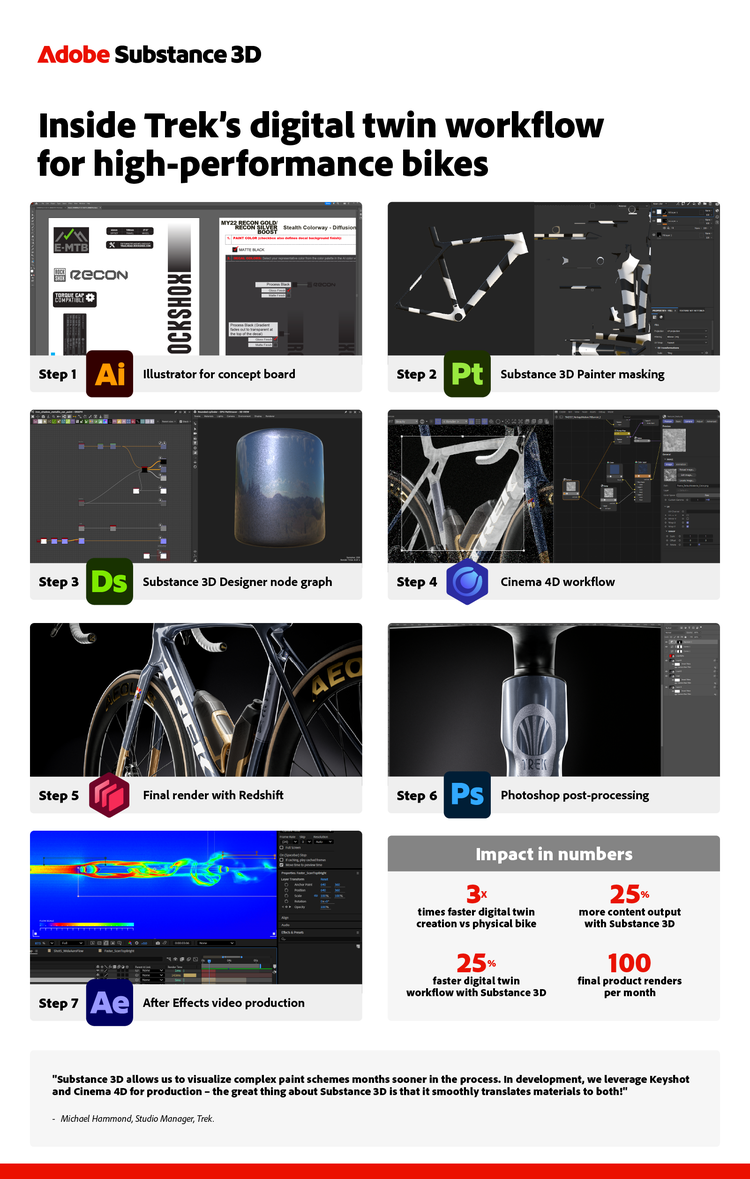
For bicycle manufacturer Trek, digital twins have become a central pillar of how new products are designed, validated, and brought to market. Trek relies on Adobe Substance 3D to accelerate its workflows by 25 percent, enabling the team to create digital twins of bikes up to three times faster than their physical counterparts.
These high-fidelity virtual representations of physical bikes are used across product development, production, marketing, and launches. Trek’s agile approach, centered on an open-sourced Universal Scene Description (USD) framework, enables teams to visualize photorealistic bikes months before physical prototypes or production samples are available.
Leading this effort is Trek’s digital visualization team, founded by studio manager Michael Hammond, with artists Matthew Hafez, Madeline Huc, and Noah Sturbois. We spoke with them about their new digital twin workflow.
Digital visualization for world-class bikes
Michael Hammond, Studio Manager: At Trek, digital visualization supports the full product lifecycle, from early design reviews to final marketing content. During product development, teams use Photoshop, Illustrator, and Substance 3D to bring paint and graphic concepts to a higher level of fidelity, helping inform critical design decisions before physical products exist.
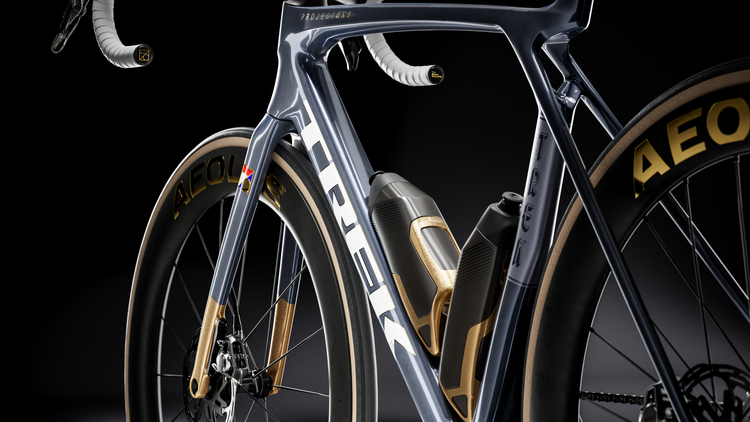
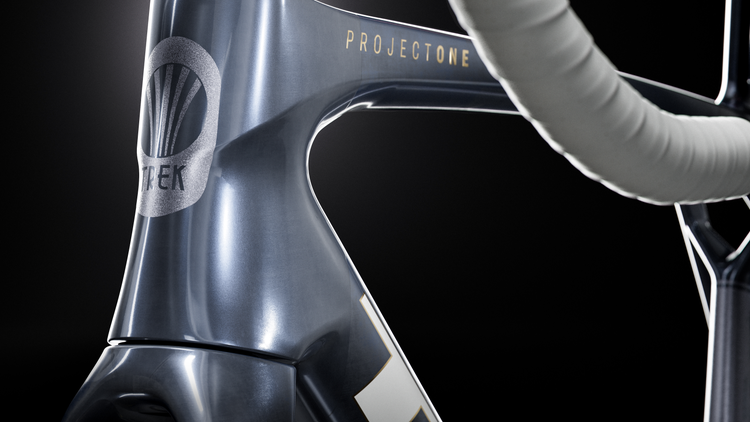
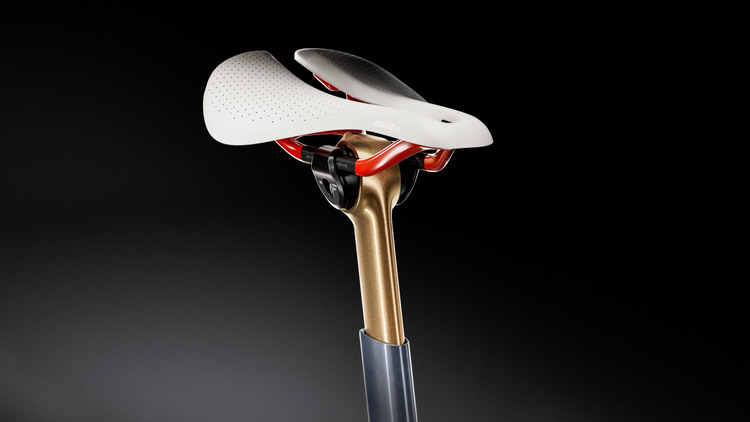
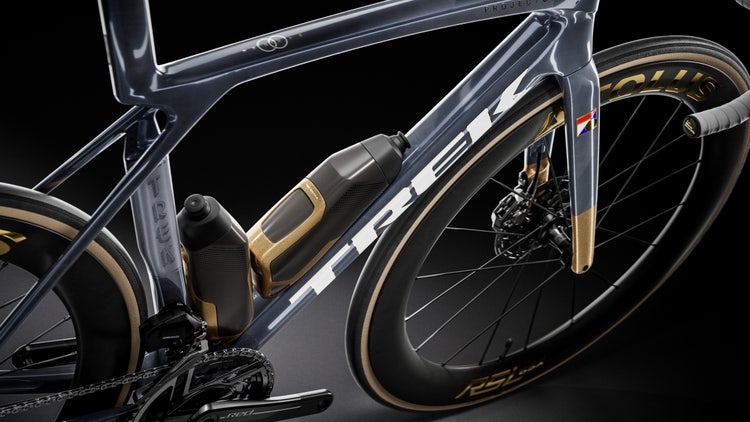
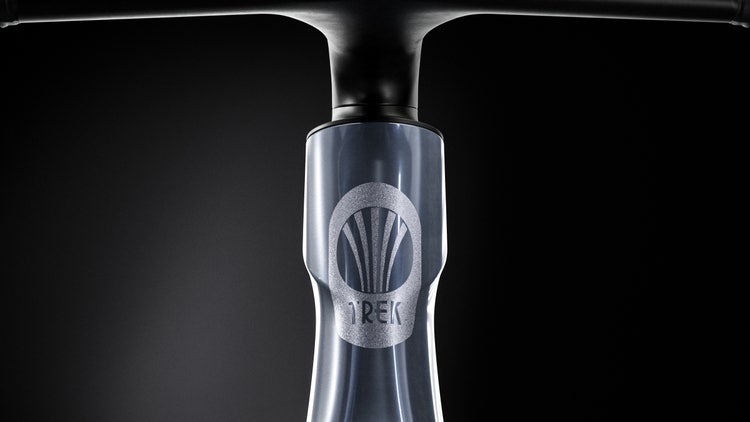
For production and marketing, Trek creates 1:1 photorealistic digital twins of its bikes using Cinema 4D, Redshift, and Substance 3D. This is especially critical for accurately recreating complex Project One custom paint schemes, including intricate fades, masking, and unique surface textures, across both still imagery and animation content featured on Trek’s website and social channels.
Accelerating digital twin production
Hammond: Our objective is photorealism and technical accuracy. When customers are spending upwards of $15K on a bike, the imagery must be flawless. We must also do this at scale: we have various models, different specifications, and multiple color variations and graphic packages.
One of the biggest advantages of working in 3D is speed. We have a lot of assets to manage — bikes are a combination of many visible parts, and for a single bike, you can see over 25 materials and just as many decals and graphics. Because we can realistically visualize products digitally, we can see the final result long before we have a physical sample in hand.
Substance 3D allows us to visualize complex paint schemes weeks and often months sooner in the process. The great thing about Substance 3D materials is that they integrate smoothly with other production tools such as Keyshot and Cinema 4D!
Building Trek’s digital supply chain
Hammond: We rely on CAD (Computer-Aided Design) models coming from our production engineering team and suppliers. We then assemble each bike to spec. We call this the digital supply chain. We then convert the CAD model into a clean USD package with important metadata. The USD format enables artists to use these assets in any number of digital content creation tools.
Our digital pipeline team, which includes lead technical artist Clayton Krause and CAD specialist Mitch Kramer, has built an entire library of finished parts and bikes that we call our ‘digital factory,’ and more recently, we’ve taken on a similar effort to build a complete library of our digital paints.
Substance 3D at the core of the digital twin process
Matthew Hafez, Senior 3D Artist: The Substance 3D tools play a critical role in our digital twin production process. One major strength is the procedural flexibility inside Substance 3D Designer. When we need to replicate unique product patterns, the Designer node graph allows the team to build detailed, highly adjustable materials that can be easily refined without starting over.
The benefit is full control. We can easily adjust scale, pattern density, proportions, and color variations without rebuilding the material from scratch. This level of control is essential when matching real-world products that have strict visual standards.
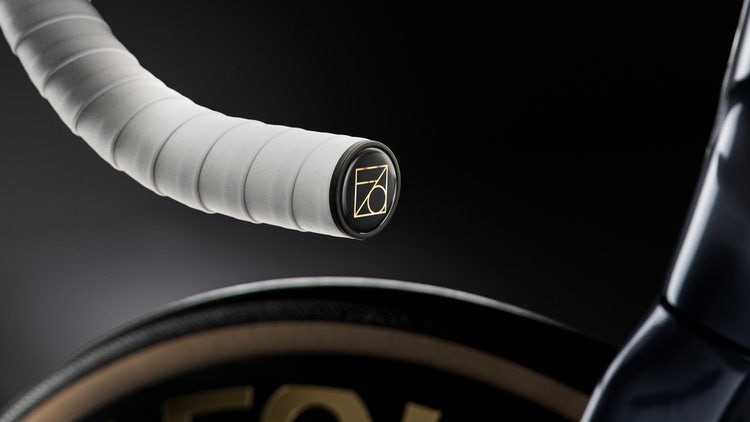
A good example is our eco tack handlebar tape. The surface pattern needs to be precise and repeatable, and Designer allows us to recreate it accurately while keeping it fully adjustable for future iterations.
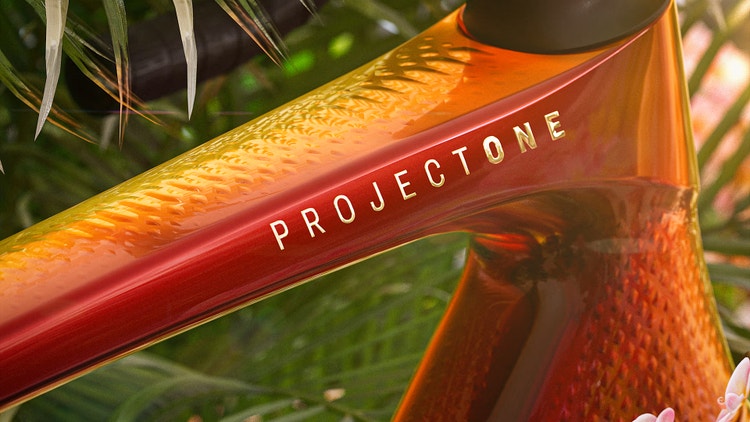
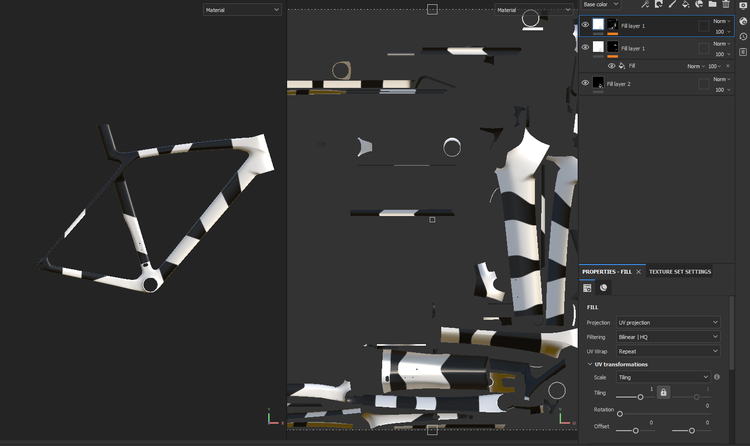
Similarly, Substance 3D Painter is indispensable when recreating custom frame paints for Trek’s Project One ICON line of custom paint schemes. These are highly artistic, one-of-a-kind designs created by real paint artists. Our job is to replicate them as accurately as possible in a digital format.
Painter gives us the right tools for that with brushes, stencils, smart materials, and projection workflows. It allows us to layer complex graphics, blend textures, and build paint effects that match the physical bike. A strong example is the Project One ICON “serpentine” paint scheme:
Substance 3D Painter is the only thing I use when it comes to creating convincingly realistic tires: the wide range of existing texture assets, the ability to export at high resolution, the ease of importing our own assets, and the ability to adjust specific maps all play a key role in building out our library of tires.
Using a custom rubber smart material as the universal base ensures all our tires are within an acceptable visual range of one another. Painter’s UV selection tools let me select exactly what I need in an incredibly quick fashion, and the layered approach to building materials makes it a breeze to store variations of the same product in a single file.
Integrating Substance 3D into Trek’s production pipeline
Hafez: We use Substance 3D Painter to create texture assets for custom designs spanning across multiple bike models with different meshes. We start with the main design using custom brushes scanned from real painted surfaces. Sometimes we use Substance 3D Designer to generate supporting patterns such as crystalline effects.
Once the design is completed on one model, for example the Madone race bike, and test renders are approved, we duplicate the project, reimport a new model mesh like one for the Speed Concept or the Domane, and readjust transforms and brushes to fit the new form. This keeps the output consistent across models and saves time.
The main tool I use is Substance 3D Painter. Trek produces a series of special designs we call “Icons.” These generally stand out in the lineup for their complexity and often require extremely fine detail. Substance 3D Painter is the main tool I use because it’s perfectly suited to tackle that challenge, giving us the precise control we need to represent them digitally.
To be efficient with time, I use Painter to make black and white masks with patterns, like a smoke effect. This ensures all color corrections happen mostly in Cinema 4D with some editing in Photoshop. The power and flexibility of this workflow allow artists to be more efficient with their time.
Connecting the workflow with Photoshop and Illustrator
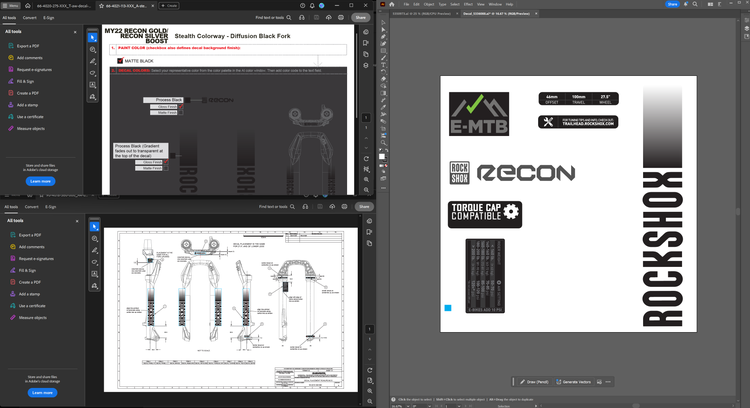
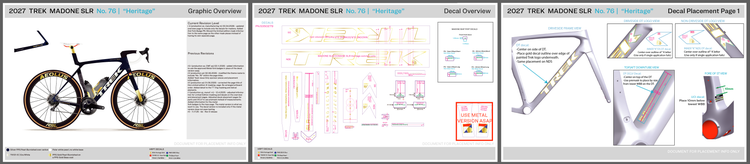
Huc: I use Illustrator to set up decals in Cinema 4D. This is done by placing the decal, wrapping it around the frame, and then turning off any shadows to make the decals look as flush as possible against the frame. We also use Illustrator to build our tech packs for production, as shown in the example below.
As for Photoshop, I probably use it every day for post-render editing. I need it to correct any issues with the paint or decals after they’ve been rendered. We rely on AOVs which store per-pixel information about different aspects of any given render (diffuse lighting, volume lighting, reflections, specular, etc.) on their own visual layer. A lot of masking is required for detailed corrections, and this is helped by AOVs like cryptoshade or cryptomatte, as well as custom AOVs tailored to the situation.
Video content with After Effects and Premiere
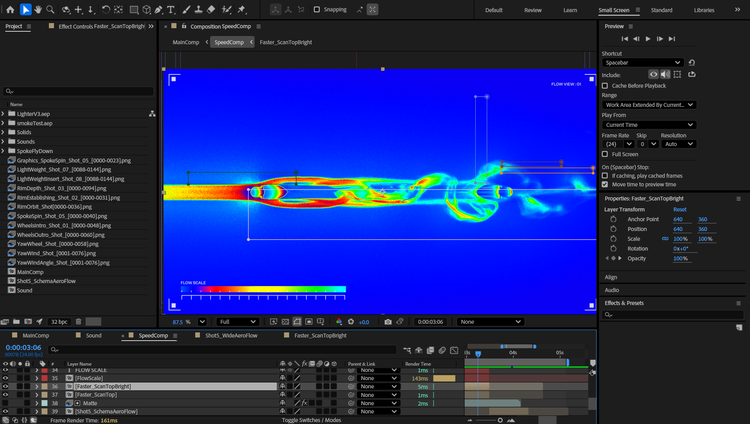
Sturbois: All our post-production work is done in After Effects and Premiere. After Effects’ increasing adoption of ACEScg, and existing EXR extraction tools, make it a competent and flexible tool for fine-tuning an animation’s visual identity.
Premiere serves as the final cutting floor. Its playback of large files is astoundingly fast and allows us to iterate and revise projects at a blink-and-you'll-miss-it pace. There’s not much else to it; it’s just speedy!
In conjunction with one another, they serve all my postproduction needs and help deliver assets our team can be proud of.
The future of product visualization at Trek
Hammond: As our library of digital parts, components, and platforms grows, maintaining a library of real-world, accurate materials becomes essential. By building and keeping physically accurate PBR materials for paints, finishes, and components, we can reuse them across projects and bring new products to life much faster in 3D.
We will need a more robust system that can maintain, manipulate, and update hundreds of parts and thousands of subcomponents across multiple categories. This system must support high-poly and low-poly assets, offline rendering, real-time configurators, and cinematic content without breaking visual consistency.
Looking ahead, we also expect deeper integration of the Substance 3D tools within our pipeline, from CAD ingestion through end-user visuals. The goal is to have a more connected workflow by continuing to implement standards such as OpenUSD and OpenPBR.
Create state-of-the-art 3D
In the Substance 3D ecosystem, smart creative apps and high-end content give you everything you need to make inspiring art. For the beginner and expert alike.
Learn more
Beyond product development, the benefits of digital twins extend across marketing and content production. Trek now produces around 100 final product renders per month, with a 25% increase in overall content output thanks to Adobe Substance 3D. This allows the brand to create a wider variety of high-quality visuals, from product renders to configurators and animations, at a lower cost and with greater consistency.
As digital twin workflows continue to evolve, Trek is setting a new standard for how products are visualized, approved, and experienced, demonstrating how 3D pipelines can transform the entire product lifecycle.