Before London-based sculptor Nick Hornby ever begins shaping metal or stone he has already chiseled his work in digital space many times over — calculating, testing, and remaking his monumental pieces to ensure every detail can withstand the forces of gravity and test of time.
Here, Nick discusses what drives his work, as well as the role of Adobe Substance 3D, Photoshop, Firefly, and Premiere in designing and presenting it.
Designing sculpture as a spatial experience
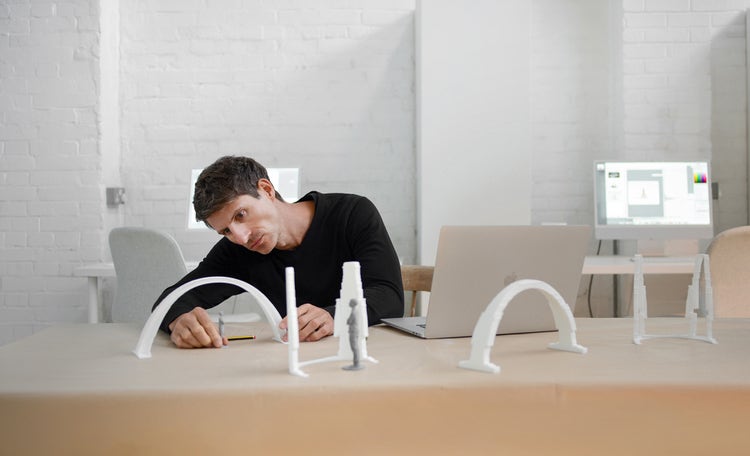
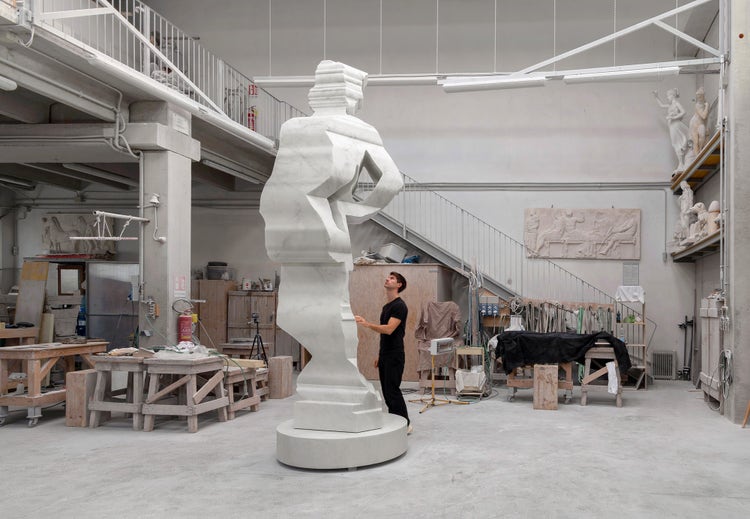
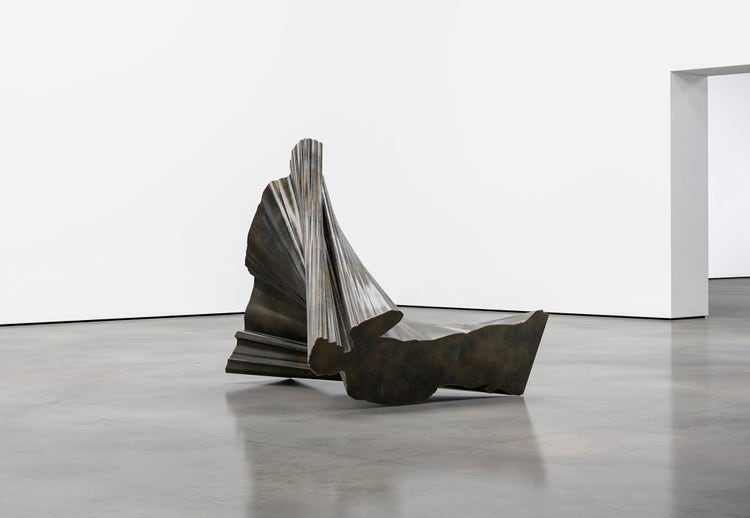
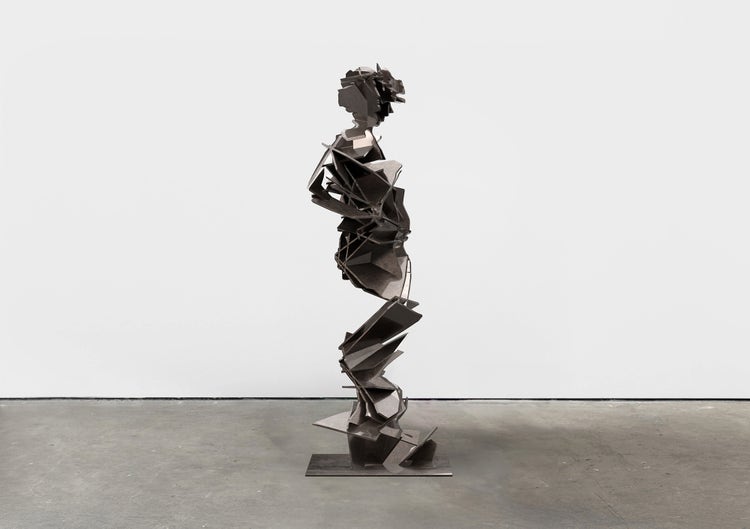
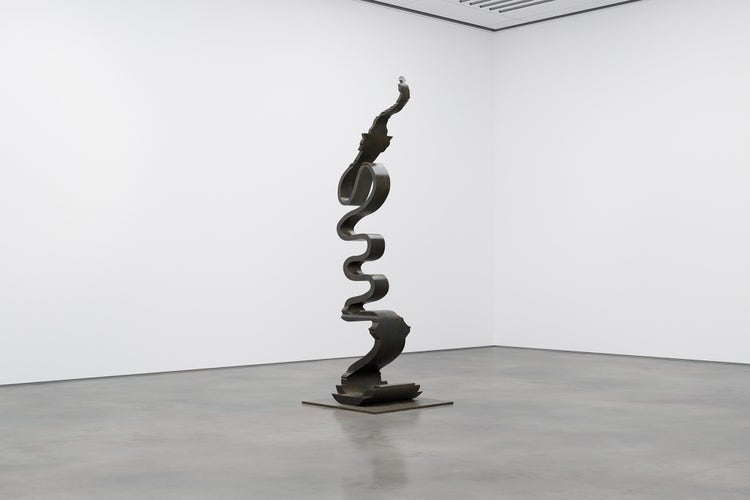
Many of my sculptures are designed to shift as you move around them, sometimes quite dramatically. A work might appear as a recognizable figure from one angle and dissolve into abstraction from another. That kind of structure — the compound intersection of multiple extruded cutouts — is impossible to imagine in your head alone. It has to be calculated in digital 3D space.
Working digitally allows me to simulate viewpoints, orbit the object, and choreograph how it unfolds in space. It becomes less about making a static object and more about designing an experience over time. The sculpture never fully resolves into a single image — it exists between readings, with the viewer completing it through movement.
I am not modeling a sculpture I have already imagined; the digital model is where the work is actually conceived. From the outset, I'm calculating shapes in 3D, testing ideas, and refining structures. By the time something becomes physical, it has already been made and remade many times on screen. In a discipline where objects can take years to realize, the digital space is where decisions are made — decisions that later become difficult or impossible to reverse.
What interests me about sculpture more broadly is that it operates in two registers at once. On the one hand it's conceptual: constructing ideas, images, narratives. On the other it's completely physical: materials have to stand up, fixings have to hold, forces have to be resolved. Bringing the digital realm into that equation introduces something slightly surreal. You can construct the appearance of material reality (weight, atmosphere, texture) but within an infinitely fluid environment where every point can be endlessly adjusted.
Speed and precision with digital fabrication
By the time a sculpture is fabricated, it may involve years of work, multiple collaborators, and significant cost. Being able to visualize materials and surfaces accurately in advance is critical. It allows me to make decisions early and to communicate clearly. Using Adobe Substance 3D, Photoshop, and Firefly, the distinction between sketch, simulation, presentation, and artwork begins to collapse. I can test variations and endlessly refine without losing earlier stages. This becomes especially important with compound intersections, where even a slight shift in one element can dramatically alter both the appearance and structural viability of the whole.
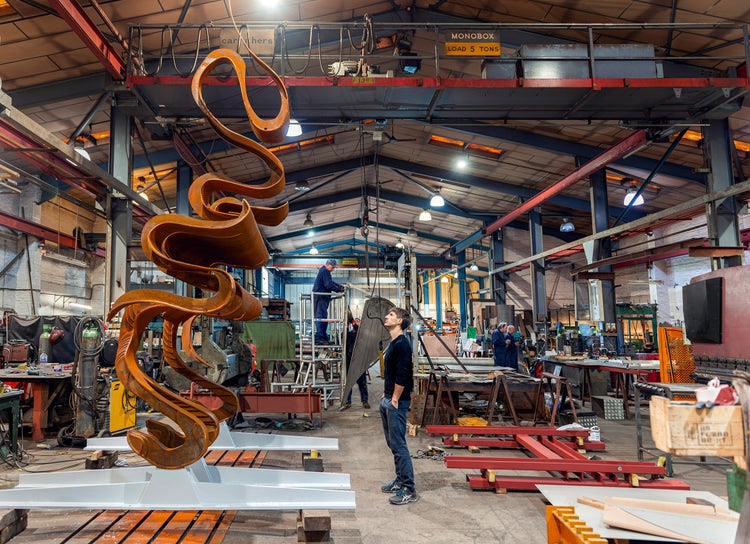
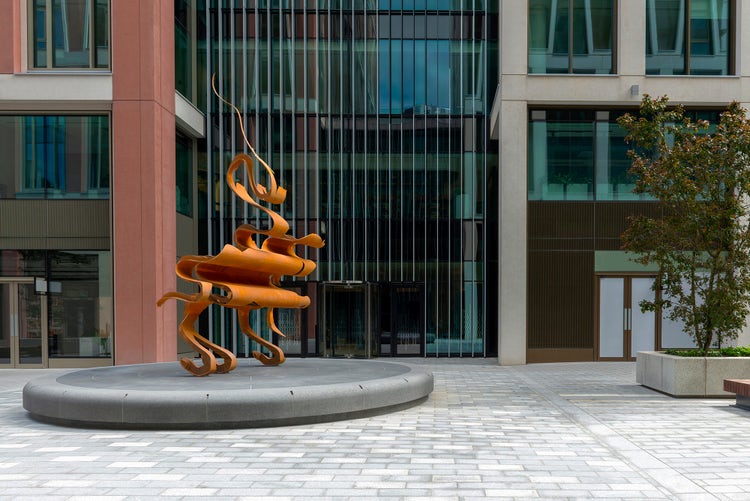
Working digitally also allows me to think across scales. The same model can move from something almost microscopic — a surface behaving like liquid or skin — to something architectural, a form that might sit in a public square for decades. Forms can be pushed to the edge of what feels structurally or perceptually viable, then carefully translated back into something that can exist in the real world.
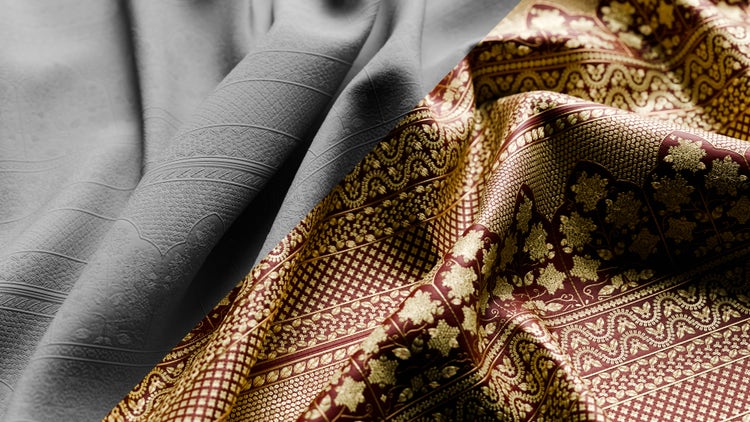
Surface and material are integral to how sculpture is read. This is where Adobe Substance 3D Painter plays a key role, allowing me to test and refine material behaviors — whether something feels dense, reflective, or unstable — before it exists physically. A stone might be pure white marble or heavily veined; bronze can be a deep Victorian black, a warm brown or an oxidized green. These shifts fundamentally alter how a form is understood.
I'll often test multiple material states simultaneously — whether a form reads more convincingly as polished steel, oxidized bronze, glossy lacquer or carved marble. What's powerful about Substance 3D is the speed and precision with which those transitions can be explored. A material can move from something geological to something almost synthetic or liquid within seconds.
Zygotes and confessions: From personal narrative to digital surface
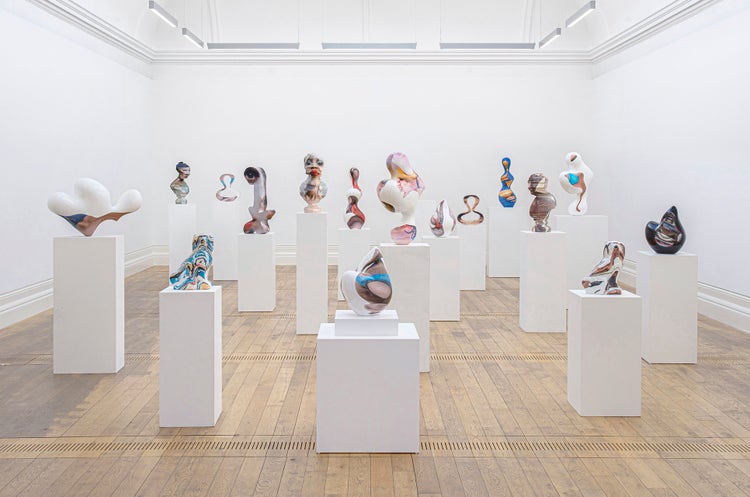
Zygotes and Confessions marked a decisive shift in my practice toward something more personal. Up to that point, my work had engaged primarily with art history, often deliberately excluding my own voice. This series marked a U-turn — a move toward autobiographical material, built from intimate, often charged, images.
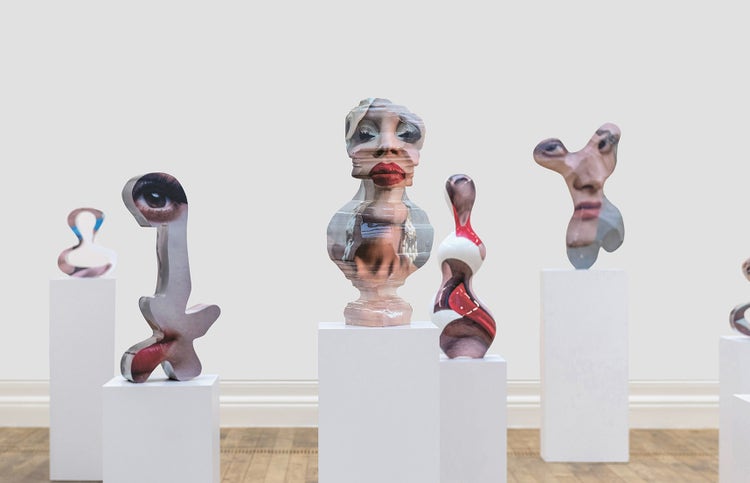
The exhibition was structured around three types of objects: portrait busts, biomorphic bodies, and Victorian mantelpiece dogs. Together they form a fragmented narrative space. The busts, in particular, create a direct confrontation with the viewer, positioning them somewhere between observer and participant.
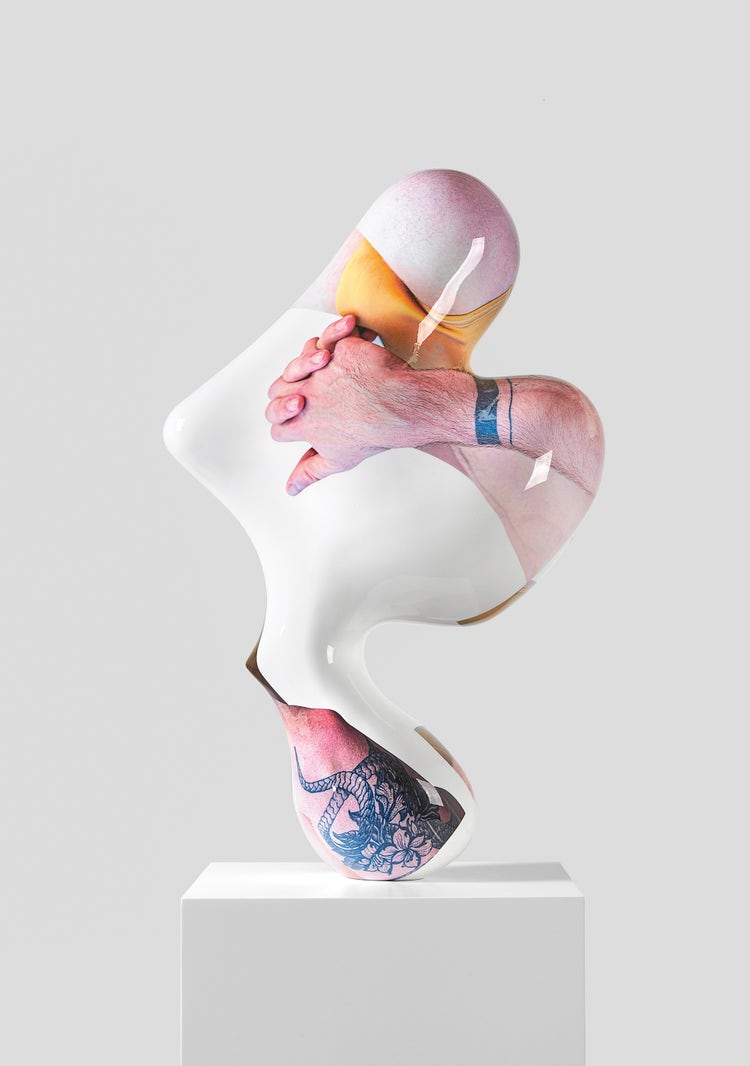
The works are driven by digitally generated surfaces, translated into physical form through hydrographic printing — a process with an uncanny resemblance to the experience of our screens. Each object is dipped into a photographic transfer, producing a high-gloss surface built up through layers of lacquer. There's a moment where the image wraps itself around the form almost instantaneously — it feels like a physical echo of what has already happened digitally. The final gloss carries something of the screen into the object: a residue of the digital image translated into physical surface.
The process is one of collision and negotiation. Fragments from different art-historical sources are combined and reconfigured in the digital environment, allowing forms to intersect with a precision that would otherwise be difficult. What emerges is not a seamless synthesis but something intentionally unresolved — existing in a state of tension rather than resolution.
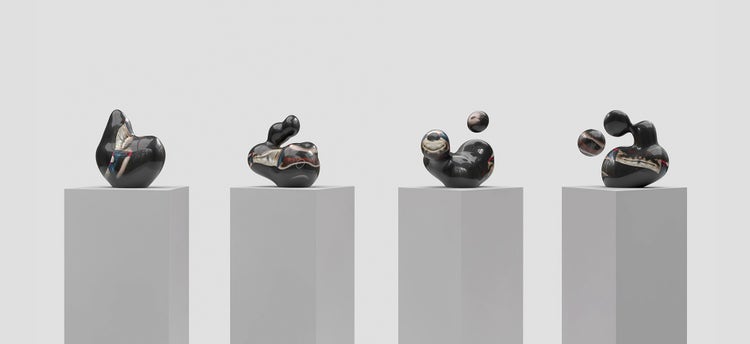
I've recently revisited the collection, creating animations that allow the forms to move beyond physical constraints — floating, folding, looping in space. Rather than being separate from the sculptures, the animations feed back into them. In a sense, the animation becomes the sculpture thinking out loud, returning the work to the screen where it was first conceived.
From image to object: Communicating and extending the work
Images and visualizations are central to my process at every stage. Whether I'm working with fabricators, clients, or institutions, the ability to produce clear, convincing visuals is essential. Adobe Photoshop plays a key role here, particularly in compositing works into specific sites and contexts. Tools like Harmonize have made that process far more fluid and precise, allowing ideas to be tested quickly within real environments.
Much of my process involves placing speculative sculptures into real architectural or landscape settings very early on. Being able to test scale, atmosphere, light conditions, and material behavior directly within a site image significantly accelerates how quickly an idea can become spatially convincing.
Adobe Firefly has become increasingly important for generating short animations that convey a sense of atmosphere and presence. For rough proposal stages, I can move extremely quickly: compositing an object in Photoshop, extending atmosphere or motion through Firefly, then assembling short sequences in Premiere. That ability to rapidly generate convincing visualizations is invaluable when communicating ideas to clients, institutions, or fabricators.
Premiere becomes the place where these fragments are assembled into a coherent temporal experience — somewhere between documentation, proposal, and film.
For me, still images, 3D forms, and animation are not separate modes — they're different expressions of the same underlying process. A form might begin as a digital model, be explored through images, extended into animation, and eventually realized as a physical sculpture. Each stage informs the others, creating a continuous loop rather than a linear sequence. The work moves back and forth between digital and physical; it doesn't sit in one place, it circulates.
Create state-of-the-art 3D
In the Substance 3D ecosystem, smart creative apps and high-end content give you everything you need to make inspiring art. For the beginner and expert alike.
Learn more
Recommended for you
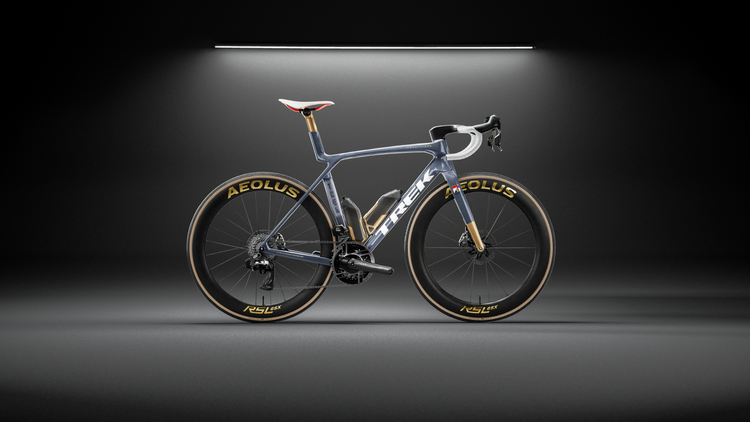
How Trek uses Adobe Substance 3D to create digital twins for their high-performance bikes
How does Trek bring high-performance bicycles to market faster? Discover how Trek uses digital twins and Adobe Substance 3D to create photorealistic bikes up to 3× faster than physical versions, scaling content production across product development, marketing, and launches.
05-26-2026
How Open USD and automation can accelerate content production
How do you scale 3D content production without compromising quality or speed? Discover how Adobe rebuilt its Substance 3D Assets pipeline with OpenUSD and automation, generating over 55,000 renders in just three months.
04-02-2026
Faster workflows, precise creative control, and a more connected 3D pipeline: What’s new in Substance 3D
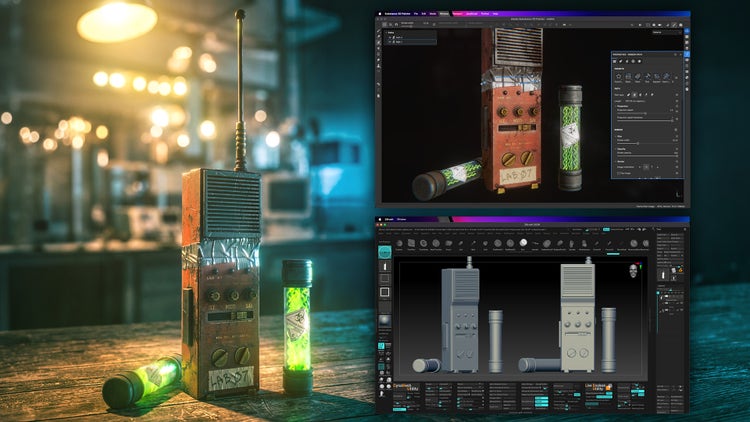
Discover the newest releases in Substance 3D: Designer 16, Sampler 6, OpenPBR support across the Substance ecosystem, and a one-click ZBrush-to-Painter workflow for connected pipelines.
05-20-2026