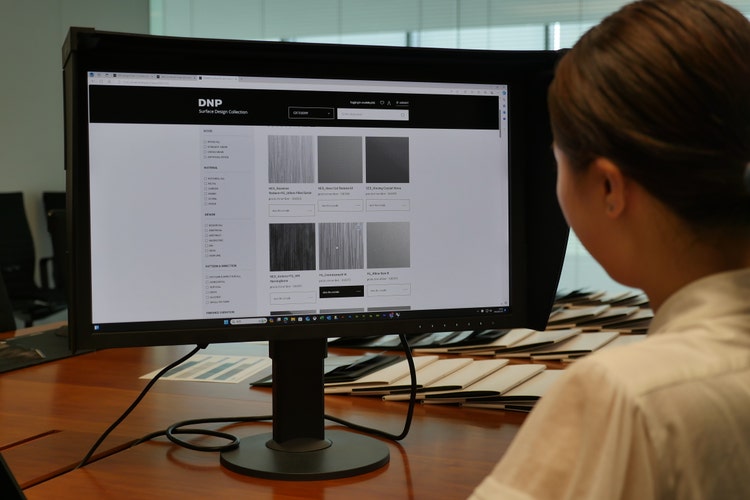
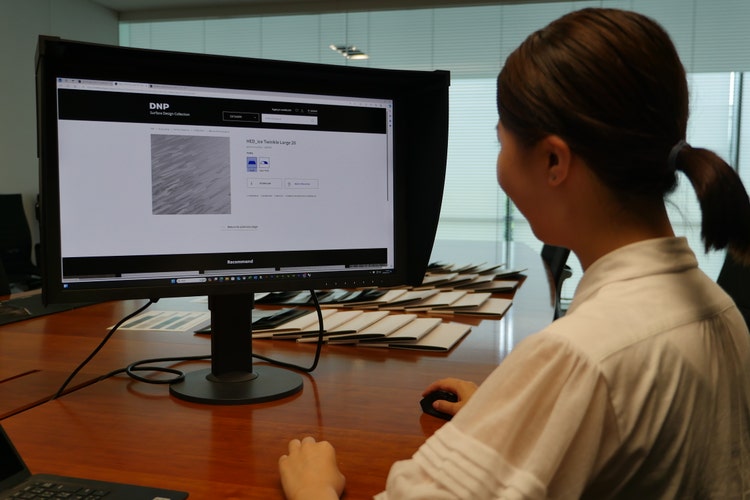
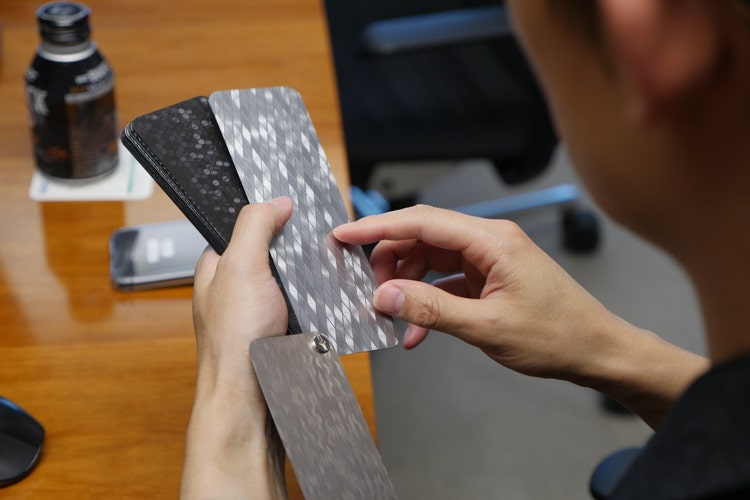
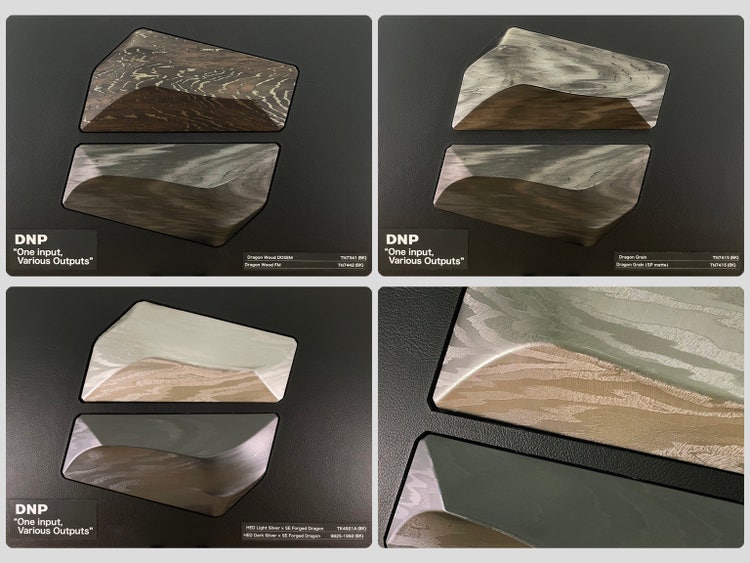
デジタルデータの作成は、フィジカルサンプルの制作から始まります。これは、どのようにフィルム表面で光が反射するのかなど、実物を見ないと確認できないためです。フィジカルサンプルで仕上がりを確認した後、それを見ながらSubstance 3D Painter やSubstance 3D Designer でデジタルデータとして再現し、Substance 3D Stager でレンダリングしたものがカタログに登録されます。こうしたワークフローのため、デジタルカタログに掲載されているデザインはすべて、画面上はもちろん、フィジカルサンプルでも確認できます。
加飾フィルムのフィジカルサンプル
カタログに掲載されているデータは、得意先要望に合わせて提供することも可能です。得意先が使用する 3D ソフトにデータを読み込めば、自動車のパーツに適用した時の外観をシミュレーションできるため、得意先へのプレゼンテーションツールとしても使えます。同チーム 中本 亮氏は、「この使い方の便利なところは、得意先からこういうレザーにしたい、こういうシボのパターンにしたいという話があれば、その場ですぐデータを修正できる点です。打ち合わせ中に要求に対応して提案できるのは、個人的に Substance 3D の非常にありがたい価値だと思っています」と語りました。
大日本印刷株式会社 モビリティ事業部 モビリティイノベーティブデザインチーム 中本 亮氏
ワークフローのデジタル化を支える Substance 3D
同事業部が Substance 3D の採用を決めたのは、ワークフローのデジタル化を推進しようとしていた 2020 年です。当時、日本では多くのデザインに関わる部署が、Substance 3D の使用を開始したり検討したりする動きをみせていたため、業界のデファクトスタンダードとなる可能性を感じたことが採用の主な理由でした。今では、デジタルカタログ、得意先への CG プレゼンテーション、サーフェス CMF (Color/Material/Finish)のデジタルプロトタイピングなど、同事業部にとって Substance 3D は欠かせないツールになっています。
同事業部が従来からパターンや質感のデータ作成に使用しているAdobe Photoshop、Adobe Illustrator との親和性の高さも期待通りでした。「特に Substance 3D Painter やSubstance 3D Sampler のインターフェイスは Photoshop や Illustrator と似ているため、『なんとなくこうすればいけるかな?』が通用することがよくあります。アドビツールの使用歴が長い人ほど馴染みやすい、感覚的に使える UI になっているように思います」と太田氏は述べました。
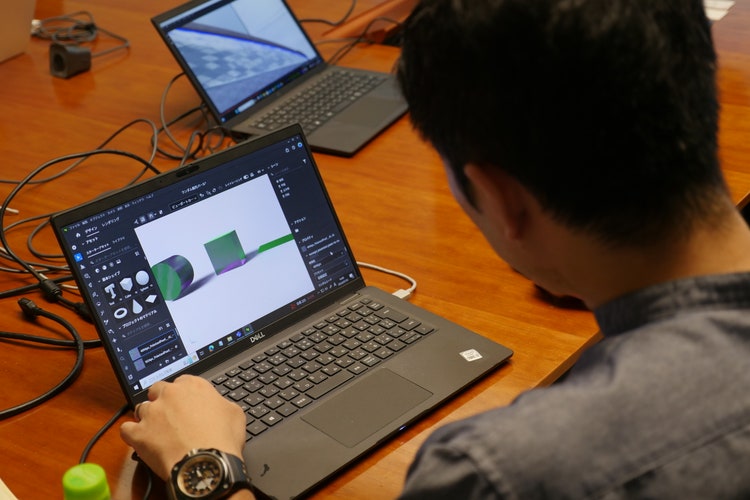
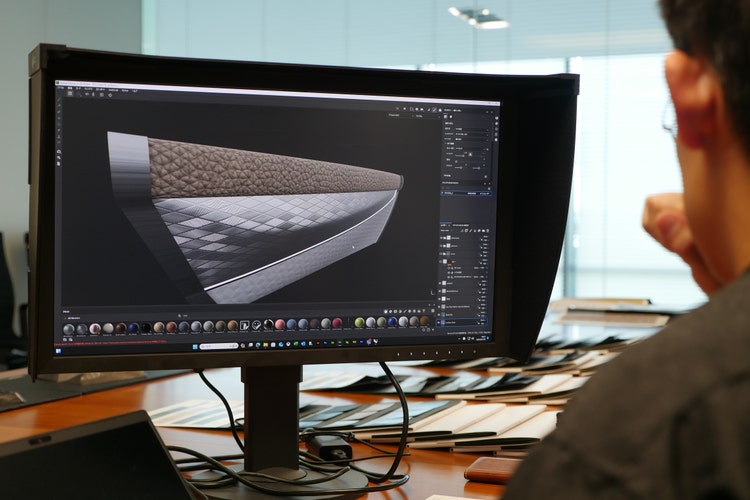
Substance 3D を操作する太田氏
Substance 3D はワークフローの改善にも役立っています。「Illustrator でパターンのデータを作図しているとき、それがフィジカルサンプルになった時の光り方は、以前は経験から想像するしかありませんでした。Illustrator から Substance 3D にデータを渡せば光り方を確認できます。光を確認したらまた Illustrator に戻って調整してと、行ったり来たりすれば確信を持って作業できます」と中本氏は言います。最近では、Painter に Illustrator ファイルを直接読み込めるようになったことに、ワークフロー効率化の大きな可能性を感じたそうです。
CAD で作成したモデルに加飾フィルムのデータを貼り付けた Substance 3D Painter の画面を示す中本氏
ストーリーを伝えるサーフェスデザイン
中本氏は、デジタルカタログに関わる工程の中でも、フィジカルサンプルの版元となるデザイン作成の重要性と難しさを強調しました。「得意先から欲しいデザインを指定される場合は別ですが、こちらから将来的に流行りそうなものを予想してパターンをつくるのはかなり大変です。手を動かすと何となくパターンはつくれてしまうのですが、つくるだけなら AI でもできてしまいますし、その背後にある『何故このパターンなのか』を語るストーリーが存在しなければ、提案する価値がないと思っています。ストーリーを考えて、それをどのような形でパターンに落とし込んでいこうかと考えるのが一番時間のかかるところです」。その試行錯誤の段階でも Substance 3D は役立っているそうです。
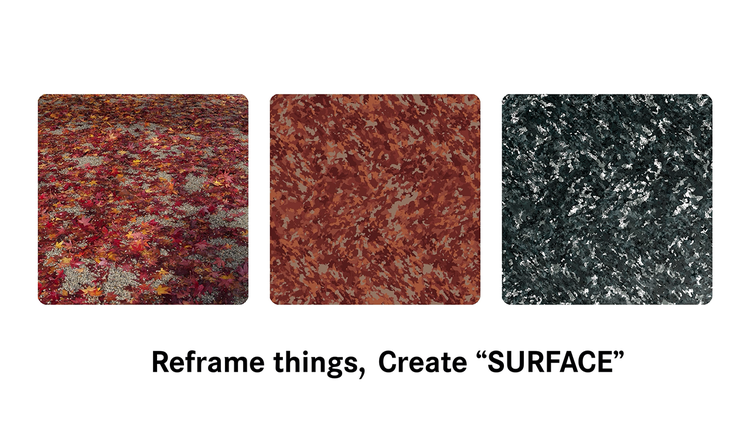
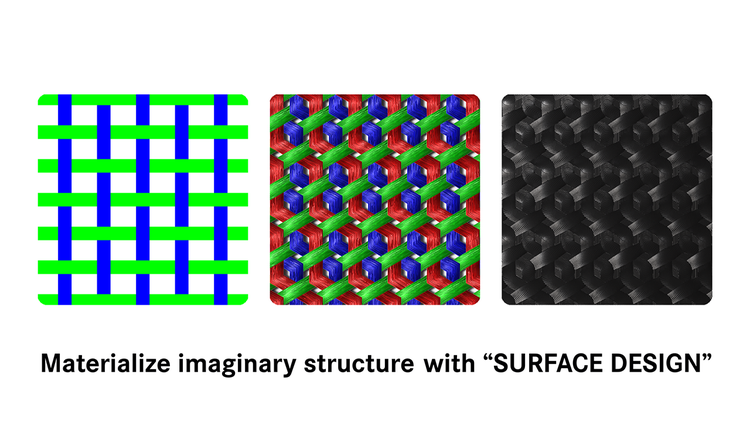
他にも、「くみかえる」をテーマに、モミジを全く異なる素材に見せられる質感表現の幅を紹介する動画、「そうぞうする」をテーマに、誰も見たことがない全く新しい「カーボン」の創造が試みられている動画が公開されています。これらの動画の制作には、Photoshop、Illustrator、Adobe After Effects、Adobe Animate、Substance 3D が用いられています。
You can control how Adobe websites use cookies and similar technologies by making choices below. But note that if you disable cookies and similar technologies entirely, Adobe websites may not function properly.
Cookies are small text files stored by your web browser when you use websites. There are also other technologies that can be used for similar purposes like HTML5 Local Storage and local shared objects, web beacons, and embedded scripts. These technologies help us do things like remembering you and your preferences when you return to our sites, measure how you use the website, conduct market research, and gather information about the ads you see and interact with.
You can make choices in the menu below about what cookies and other technologies you want us to use on Adobe sites when you visit them from this browser. You can always change those choices later by clicking on the Cookie Preferences link at the bottom of the page.
If enabled:
We can improve your experience by tailoring the site and the content to things we think might be of interest
We can better keep track of your preferences — like what language you prefer to use
We will better understand your likely interests so we can provide you more relevant Adobe ads and content on non-Adobe websites and in non-Adobe apps
It will help us improve the performance of our website and those of our partners who use the Adobe Experience Cloud
If disabled:
We won’t be able to remember you from session to session so the experience may not be tailored to your interests
You’ll still have access to the content of the site but certain features that depend on cookies may not function
You’ll still see ads, they just may not be as relevant to you
General information
You can control how Adobe websites use cookies and similar technologies by making choices below. But note that if you disable cookies and similar technologies entirely, Adobe websites may not function properly.
Cookies are small text files stored by your web browser when you use websites. There are also other technologies that can be used for similar purposes like HTML5 Local Storage, web beacons, and embedded scripts. These technologies help us do things like remembering you and your preferences when you return to our sites, measure how you use the website, conduct market research, and gather information about the ads you see and interact with.
You can make choices in the menu below about what cookies and other technologies you want us to use on Adobe sites when you visit them from this browser. You can always change those choices later by clicking on the Cookie Preferences link at the bottom of the page.
If enabled:
We can improve your experience by tailoring the site and the content to things we think might be of interest
We can better keep track of your preferences — like what language you prefer to use
We will better understand your likely interests so we can provide you more relevant Adobe ads and content on non-Adobe websites and in non-Adobe apps
It will help us improve the performance of our website and those of our partners who use the Adobe Experience Cloud
If disabled:
We won’t be able to remember you from session to session so the experience may not be tailored to your interests
We’ll still count your use of our site and services
You’ll still have access to the content of the site but certain features that depend on cookies may not function
You’ll still see ads, they just may not be as relevant to you
Operate the site and core servicesOperate site and measure engagement
Always active
These cookies are required, and they are used to enable the site and related services core functionality. Without them the site could not operate, so they cannot be disabled.
These cookies enable the site and related services’ core functionality and collect statistics about user engagement, such as counting active use to help us understand trends. These cookies cannot be disabled.
Measure performance
These cookies are used to analyze site usage to measure and improve performance. Without them Adobe cannot know what content is most valued and how often unique visitors return to the site, making it hard to improve information we offer to you.
These cookies are used to analyze site usage to measure and improve performance. Without them Adobe cannot know what content is most valued, making it hard to improve information we offer to you.
Extend functionality
These cookies are used to enhance the functionality of Adobe sites such as remembering your settings and preferences to deliver a personalized experience; for example, your username, your repeated visits, preferred language, your country, or any other saved preference.
Personalize advertising
These cookies are used to enable Adobe and our partners to serve ads more relevant to your interests. Without them you will still see ads, but they might not be as relevant to you.