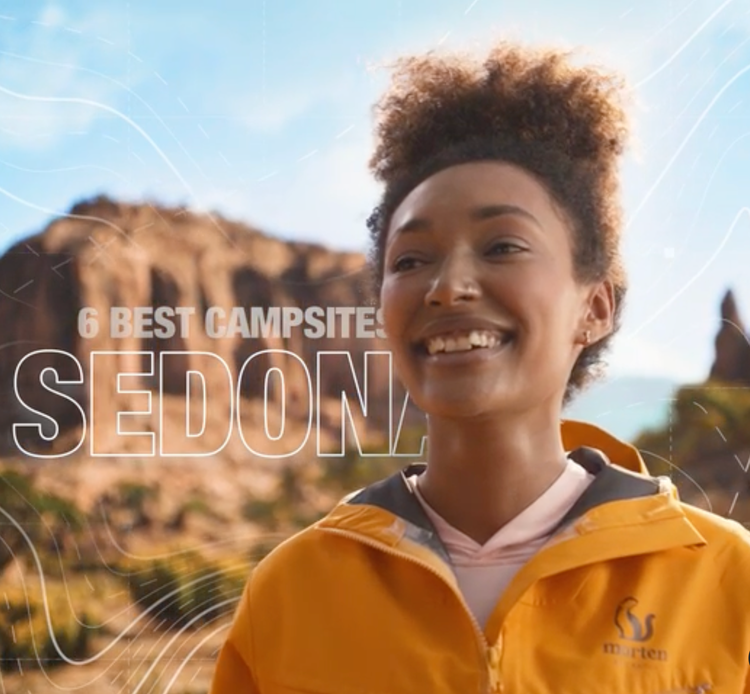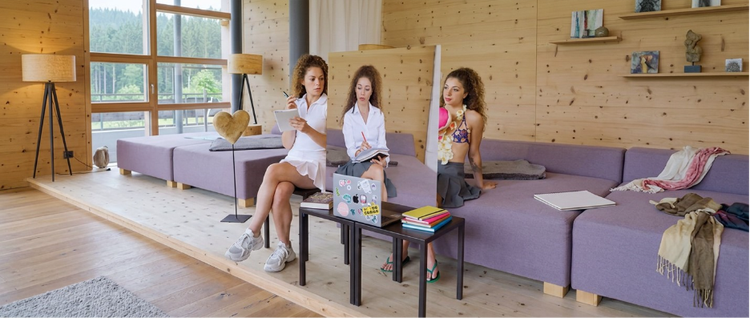
For sisters Ylenia and Nicole Burato what you don’t see is the whole point. The Milan-based creative duo known as LeTwins have produced some of the most striking visual and brand content on social media, delighting their 20 million TikTok followers. Today they’re known for using advanced VFX, CGI, and 3D techniques to produce engaging travel and branded content that, in their words, “turn the ordinary into extraordinary.”
LeTwins began with little more than a video camera and a sense of curiosity, beginning with travel and branded content before realizing that they were spending more and more time in the edit — taking sequences apart and rebuilding them just to see how far they could go. As their craft rapidly developed, so did their techniques and preparation..
Let’s dive into their creative process.
Storytelling first, technique second
While LeTwins are most known for their amazing match cuts, transitions that connect two shots through similar movement or composition, and super zooms, which rapidly zoom in or out to heighten energy or focus. They believe that the best effect is the one that disappears into the story.
"When they really work, they guide the viewer's eye and make the transition from one shot to the next almost imperceptible," Ylenia and Nicole explain. "The goal is never to highlight the effect itself, but to use it to support the pacing and enhance what's happening on screen."
That philosophy shapes every creative decision — from how they shoot to how they build sequences in the timeline. The best effect, in their view, isn't the flashiest one. It's the one that disappears into the story.
How it starts: experimentation without limits
Neither of these techniques arrived fully formed. Both grew out of a habit the sisters describe as an inability to leave anything alone.
"We've always had a tendency to never stop at the first version of something," they say. "We often found ourselves taking sequences apart and rebuilding them just to see how far they could go."
Editing, for them, has always been a creative space with few constraints — where curiosity drives the work more than convention. That spirit of experimentation is what eventually turned standard transitions into something audiences would pause to rewatch.
Inside LeTwins’ Premiere workflow
Match cuts
The process begins before the camera rolls. When planning a match cut, Ylenia and Nicole look for a natural connector between two clips: a person's position in the frame, a shape, an object, or a direction of movement. Then, during production, they make sure to keep focal length, camera distance, and framing as consistent as possible across both shots. The more the images already match in-camera, the more seamless the cut will be in post.
In Premiere, they place both clips on the timeline and temporarily lower the opacity of the second clip to dial in the small details. This overlay view lets them align subjects, movements, and visual reference points with precision, often working frame-by-frame until the two clips feel like a single continuous moment. Once they lock the alignment, opacity goes back to 100 percent and then they refine the edit with sound design to reinforce the transition.
"When the transition becomes almost imperceptible and feels like one continuous movement, we know the match cut is working," they say.
Super zooms
They build their super zoom effect with three clips of the same subject — a close-up, a medium shot, and a wide shot — all captured by moving the camera backward in a straight line while keeping the subject centered. To do this, they lock the focus, exposure, and white balance throughout to make sure all three shots are visually consistent.
Back in Premiere, they place the clips on separate tracks. Then they temporarily reduce opacity so they can make precise alignment adjustments while using the Scale and Position controls to keep the subject anchored in the same area of the frame. After this, they use masks with soft feathering to smooth the transitions between clips, and pay close attention to color adjustments to unify exposure across the sequence. Finally, they animate scale and position with keyframes to pull everything into one continuous, seamless zoom movement — finishing with a subtle motion blur effect to give it a softer, cinematic feel.
LeTwins’ acknowledge that creators can wrongly think that they can achieve this effect in post. "In reality, the secret is almost always in the preparation." When framing, movement, perspective, and timing are right, the effect largely builds itself.
The most common mistake — and the fix
The biggest error editors make when attempting either technique? Believing the secret is in the effect.
"The most common mistake is thinking that the secret lies in the effect itself," LeTwins say. "In reality, the secret is almost always in the preparation."
Framing, movement, perspective, and timing have to match before any of the Premiere work begins. When those fundamentals are right, the effect largely builds itself.
The technique in action
You can see both methods in action in their travel video for the Sheraton Cairo Hotel. They use match cuts to move viewers from the outside world into the hotel's atmosphere, visually capturing the feeling of stepping entirely into another place.
https://www.tiktok.com/@letwins/video/7620491532021288214
The video reached 1 million views, with much of the audience response focused specifically on the transition moments. It's a case where technique amplified a brand message without overpowering it — exactly the balance LeTwins aim for.
Creating with curiosity
For editors and creators asking how to build their own creative voice, Ylenia and Nicole point to the same force that shaped theirs: curiosity.
"Whenever we discover a new technique, the first question we ask ourselves is: 'How can we use it in a way we've never seen before?'" they say. "A personal style comes from exactly that — the willingness to experiment, make mistakes, try again, and find solutions that genuinely excite you and feel true to who you are."